


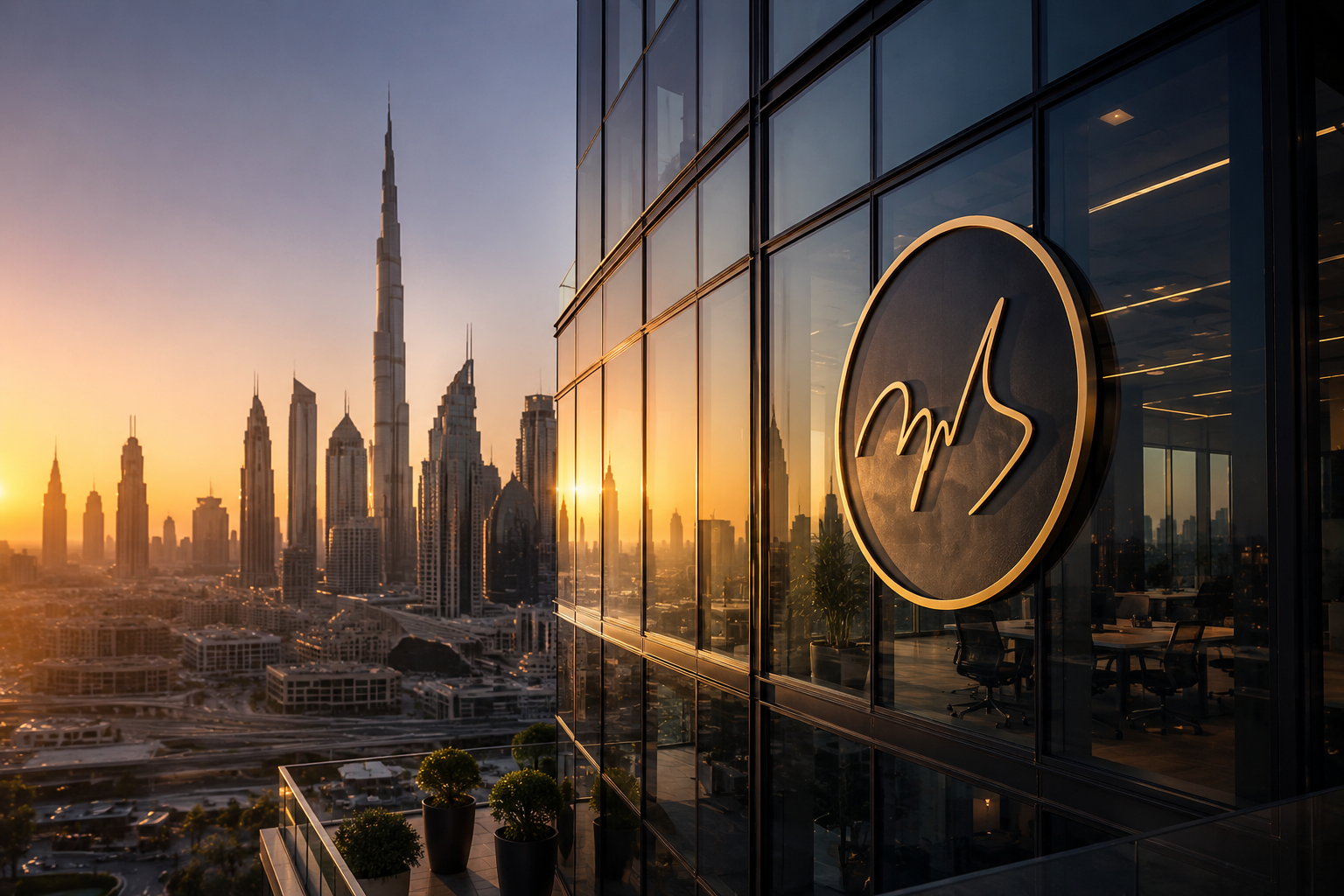
A New Global Business Geography Is Emerging
The global economic landscape is undergoing a profound transformation. Traditional commercial centers that once dominated international business are increasingly sharing influence with new strategic hubs that offer greater agility, connectivity, and operational efficiency. As multinational corporations reassess headquarters location strategies in response to changing market dynamics, geopolitical shifts, digital transformation, and evolving trade routes, Dubai has emerged as one of the most compelling destinations for international enterprises. The rise of the Dubai headquarters model reflects a broader shift in how businesses view global expansion, market access, and organizational resilience in an interconnected world.
For decades, companies seeking international growth typically established regional operations across multiple jurisdictions to maintain proximity to key markets. Today, however, organizations are increasingly looking for centralized locations capable of supporting cross-border expansion while minimizing operational complexity. Dubai has positioned itself precisely at this intersection. As an international business hub connecting East and West, the emirate offers global enterprises a uniquely balanced combination of regulatory stability, advanced infrastructure, geographic accessibility, and commercial sophistication. These advantages are transforming Dubai from a regional business center into a global economic center that increasingly influences international corporate decision-making.
The Strategic Geography That Redefines Market Access
Geography remains one of the most powerful factors influencing headquarters location strategy. While digital technologies have reduced some traditional barriers to international business, physical connectivity continues to play a critical role in executive mobility, logistics efficiency, and customer engagement. Dubai’s location places it within convenient reach of some of the world’s fastest-growing markets across Asia, Africa, Europe, and the Middle East.
Unlike many established global business capitals that primarily serve one geographic region, Dubai functions as a bridge between multiple economic zones. From a single operational headquarters, enterprises can coordinate activities across diverse markets while maintaining manageable travel schedules and efficient communication networks. This strategic positioning enables organizations to support clients, partners, and subsidiaries across multiple continents without requiring fragmented regional management structures.
The significance of this location advantage has increased considerably as international trade patterns evolve. Emerging markets continue contributing a growing share of global economic output, and businesses seeking long-term growth opportunities increasingly prioritize access to these expanding regions. Dubai’s position within global trade corridors allows companies to engage both mature economies and rapidly developing markets from a single strategic base.
Regulatory Security Creates Confidence for Global Enterprises
One of the most important considerations for multinational corporations evaluating headquarters locations is regulatory predictability. Businesses require confidence that commercial laws, investment protections, compliance frameworks, and government policies will support long-term strategic planning. Regulatory uncertainty introduces operational risk, increases compliance costs, and can discourage international investment.
Regulatory security Dubai offers has become one of the city’s most attractive competitive advantages. Over the past two decades, the UAE has implemented a series of reforms designed to strengthen investor confidence, improve transparency, and align commercial regulations with international best practices. These initiatives have contributed significantly to the country’s reputation as a business-friendly jurisdiction capable of supporting sophisticated international operations.
For multinational organizations, regulatory stability reduces friction associated with market entry, expansion planning, and cross-border transactions. Corporate leaders can make long-term investments with greater confidence, knowing that the legal and commercial framework is designed to support economic growth and international business activity. This environment is particularly valuable during periods of global uncertainty when businesses prioritize predictability and operational resilience.
Dubai’s specialized free zones further enhance regulatory attractiveness by offering tailored business ecosystems that simplify company formation, licensing, ownership structures, and operational management. These environments provide companies with flexible frameworks designed to accelerate growth while maintaining strong governance standards.
Infrastructure That Enables Seamless International Operations
Modern enterprises depend heavily on infrastructure capable of supporting global connectivity, operational efficiency, and organizational scalability. Dubai’s commitment to infrastructure development has played a central role in its emergence as a preferred headquarters destination for multinational corporations.
The city’s transportation ecosystem is among the most advanced globally. International airports, seaports, highways, and logistics networks facilitate the movement of people, products, and capital with exceptional efficiency. Dubai International Airport and Al Maktoum International Airport connect businesses to major commercial centers worldwide, while Jebel Ali Port remains one of the most important maritime gateways supporting international trade.
Equally important is the city’s digital infrastructure. In an era where data, communication, and technology drive competitive advantage, Dubai has invested heavily in advanced telecommunications systems, smart city initiatives, and digital transformation programs. Businesses operating from Dubai benefit from reliable connectivity, sophisticated data infrastructure, and access to emerging technologies that support innovation and operational excellence.
Commercial real estate also contributes significantly to Dubai’s attractiveness as a headquarters location. The city offers world-class office environments designed to accommodate multinational corporations, financial institutions, technology firms, and professional service organizations. These business districts provide not only physical infrastructure but also collaborative ecosystems that encourage networking, innovation, and strategic partnerships.
A Tax Environment Designed for Global Competitiveness
Tax considerations remain a critical component of corporate location strategy. While taxation is rarely the sole factor influencing headquarters decisions, it significantly affects profitability, capital allocation, and long-term investment planning. Dubai has developed a tax environment that enhances its appeal to international enterprises while supporting economic diversification objectives.
The UAE’s tax framework remains highly competitive relative to many major global business centers. Combined with extensive double taxation agreements and investor-friendly policies, this environment allows organizations to structure operations efficiently while maintaining compliance with international standards.
For multinational corporations, tax efficiency translates into greater financial flexibility. Resources that might otherwise be allocated to excessive tax burdens can instead support innovation, workforce development, market expansion, and strategic investment initiatives. This advantage becomes particularly significant for companies operating across multiple jurisdictions where tax optimization plays an important role in overall business performance.
Importantly, Dubai’s approach balances competitiveness with transparency. International enterprises increasingly prioritize jurisdictions capable of supporting both commercial efficiency and strong governance standards. The UAE’s ongoing regulatory modernization reinforces confidence among global investors seeking sustainable long-term operational environments.
Talent Attraction and Workforce Diversity Strengthen Competitive Advantage
A headquarters location is only as effective as its ability to attract and retain high-quality talent. As competition for skilled professionals intensifies globally, businesses increasingly evaluate labor market dynamics when selecting operational bases. Dubai’s workforce represents one of its strongest strategic assets.
The city attracts professionals from virtually every major region of the world, creating a uniquely international talent ecosystem. This diversity supports innovation, cross-cultural collaboration, and global market understanding. Companies establishing Dubai headquarters gain access to professionals with expertise spanning finance, technology, logistics, consulting, healthcare, engineering, and numerous other sectors.
The UAE’s policies supporting skilled immigration, entrepreneurship, and long-term residency have further strengthened its position as a global talent destination. Businesses benefit from a labor market capable of supporting both specialized technical roles and senior executive leadership positions. This talent accessibility reduces recruitment challenges and enables organizations to scale operations efficiently.
Workforce diversity also enhances organizational adaptability. Teams composed of individuals with varied cultural perspectives and international experience are often better equipped to navigate complex global markets. For multinational enterprises managing operations across multiple regions, this capability provides a meaningful competitive advantage.
Cross-Border Expansion Without Operational Friction
One of the defining characteristics of successful global headquarters is their ability to facilitate seamless international expansion. Businesses seeking growth opportunities across multiple jurisdictions require operational environments that simplify market entry, partnership development, and regional management.
Cross-border expansion is significantly easier when supported by strong infrastructure, efficient regulation, and international connectivity. Dubai excels across all three dimensions. Companies can establish regional headquarters while maintaining close relationships with clients, suppliers, investors, and partners across diverse markets.
The city’s extensive network of professional service providers further supports international operations. Legal advisors, financial institutions, consulting firms, logistics specialists, and technology providers offer expertise tailored to multinational business requirements. This mature ecosystem reduces operational complexity and accelerates expansion initiatives.
As global commerce becomes increasingly interconnected, businesses benefit from locations capable of functioning as strategic coordination centers rather than merely local operating markets. Dubai’s ability to serve this role explains why so many enterprises continue selecting the city as their preferred headquarters destination.
Cross-Border Expansion Without Operational Friction
orporate headquarters migration has become an increasingly significant trend within global business strategy. Companies are reevaluating traditional assumptions about where leadership teams, operational centers, and regional management functions should be located. Factors such as geopolitical uncertainty, regulatory complexity, workforce mobility, and technological change are influencing these decisions.
Dubai’s emergence as a headquarters destination reflects broader changes in global business priorities. Enterprises are no longer selecting locations solely based on historical prestige or legacy financial markets. Instead, they are prioritizing agility, connectivity, resilience, and growth potential.
Foreign direct investment trends further reinforce this shift. International investors continue directing capital toward regions capable of supporting innovation, infrastructure development, and long-term economic stability. Dubai’s success in attracting multinational corporations, family offices, investment funds, and technology companies demonstrates the effectiveness of its strategic positioning.
The city’s rise is not simply the result of favorable policies or infrastructure investments. It reflects a deliberate effort to create a comprehensive business ecosystem capable of supporting modern enterprise requirements in a rapidly changing global economy.
The Shift in Corporate Headquarters Migration Trends
Corporate headquarters migration has become an increasingly significant trend within global business strategy. Companies are reevaluating traditional assumptions about where leadership teams, operational centers, and regional management functions should be located. Factors such as geopolitical uncertainty, regulatory complexity, workforce mobility, and technological change are influencing these decisions.
Dubai’s emergence as a headquarters destination reflects broader changes in global business priorities. Enterprises are no longer selecting locations solely based on historical prestige or legacy financial markets. Instead, they are prioritizing agility, connectivity, resilience, and growth potential.
Foreign direct investment trends further reinforce this shift. International investors continue directing capital toward regions capable of supporting innovation, infrastructure development, and long-term economic stability. Dubai’s success in attracting multinational corporations, family offices, investment funds, and technology companies demonstrates the effectiveness of its strategic positioning.
The city’s rise is not simply the result of favorable policies or infrastructure investments. It reflects a deliberate effort to create a comprehensive business ecosystem capable of supporting modern enterprise requirements in a rapidly changing global economy.
The Future of Global Headquarters Strategy
As the global economic center of gravity continues shifting, headquarters location decisions will play an increasingly important role in determining organizational competitiveness. Businesses must balance operational efficiency, market access, regulatory security, talent availability, and long-term scalability when evaluating strategic locations.
Dubai’s ability to integrate these factors into a cohesive business environment positions it exceptionally well for the future. The city combines world-class infrastructure with forward-thinking governance, international connectivity, and economic diversification strategies designed to support sustainable growth.
For global enterprises, the question is no longer whether Dubai can compete with traditional business centers. Increasingly, the question is whether competing locations can match the combination of advantages Dubai now offers. The city’s role as an international business hub continues expanding as organizations seek operational models capable of supporting growth across multiple regions and economic cycles.
Conclusion
The Gateway Era represents a fundamental shift in how global enterprises approach headquarters strategy and international expansion. Dubai has emerged as a leading destination because it provides far more than geographic convenience. It offers regulatory security, advanced infrastructure, tax efficiency, workforce diversity, and a mature business ecosystem specifically designed to support international growth.
As companies navigate an increasingly interconnected and competitive global economy, the importance of headquarters location strategy will only continue to increase. Dubai’s unique position as a bridge between East and West, combined with its commitment to innovation and business excellence, makes it one of the most attractive destinations for multinational enterprises seeking long-term operational success.
For visionary leaders focused on sustainable growth, international reach, and organizational resilience, Dubai is no longer simply an option. It has become one of the defining headquarters destinations of the modern global economy.
© 2026 Mana Global. All rights reserved.