


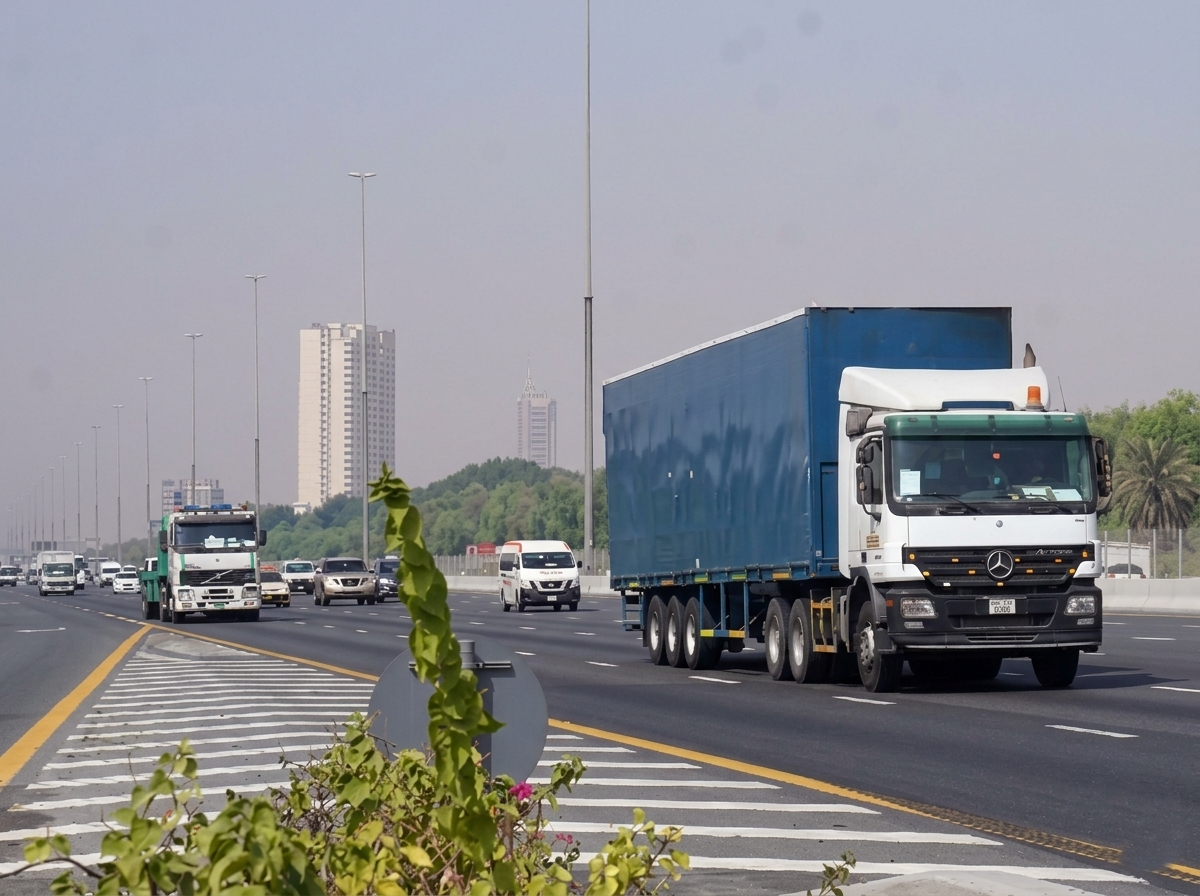
RTA Dubai Trucks Policy Marks Major Shift in Road Regulations
Dubai’s transport landscape is entering a new phase as the Roads and Transport Authority announces a significant update to the Dubai truck roads policy, allowing trucks to use all roads across the emirate in accordance with approved regulations. The decision represents a strategic shift in Dubai road regulations for trucks and signals a broader commitment to supporting logistics efficiency, economic growth, and streamlined freight movement. For businesses, transport operators, and residents alike, this update to RTA Dubai trucks policy has far-reaching implications for how heavy vehicles operate within the city’s road network.
Under the revised Dubai truck roads policy, heavy vehicles Dubai will have expanded access to routes previously subject to restrictions, provided they comply with designated operational guidelines and safety standards. The policy is designed to optimise freight mobility while maintaining traffic safety and flow, reinforcing Dubai’s position as a global logistics hub. By allowing trucks broader road access, the RTA aims to enhance connectivity between industrial zones, commercial centres, ports, and residential districts.
Understanding the Policy Change and Its Scope
The announcement clarifies that trucks can now operate across Dubai’s road network in alignment with specific regulatory controls set by the RTA. While the phrase “allowing trucks to use all roads across Dubai” signals expanded access, it does not imply unrestricted movement. Instead, heavy vehicles Dubai must adhere to time schedules, safety protocols, and technical standards that ensure minimal disruption to passenger traffic. The RTA Dubai trucks framework remains structured and data-driven, balancing freight efficiency with urban mobility considerations.
The Dubai road regulations for trucks have historically designated certain corridors and time windows for heavy vehicle movement to reduce congestion during peak hours. With the new Dubai truck roads policy, the RTA has recalibrated its approach to reflect evolving traffic patterns, infrastructure upgrades, and the growing demand for logistics services. The authority’s decision follows detailed traffic studies and performance assessments, ensuring that expanded truck access aligns with Dubai’s broader transport strategy.
This policy change takes effect according to RTA’s official timeline as outlined in the announcement, and it applies to heavy vehicles operating under valid permits and compliance requirements. The move demonstrates how regulatory frameworks adapt to the emirate’s economic growth and increasing freight volumes.
Why RTA Introduced the Dubai Truck Roads Policy Update
The rationale behind updating the Dubai truck roads policy is rooted in efficiency, economic competitiveness, and infrastructure optimisation. Dubai’s rapid urban expansion and its status as a regional trade gateway have significantly increased the movement of goods across the city. From construction materials and retail supplies to industrial freight and e-commerce deliveries, heavy vehicles Dubai play a critical role in sustaining economic activity.
By allowing trucks to use all roads within a regulated framework, the RTA Dubai trucks initiative seeks to reduce detours, shorten travel distances, and improve delivery timelines. This streamlined approach helps logistics companies lower operational costs while enhancing service reliability. The Dubai road regulations for trucks are therefore evolving in response to practical business needs and advanced road network capabilities.
Another key factor driving the policy change is infrastructure maturity. Over the past decade, Dubai has invested heavily in road expansions, intelligent traffic systems, and smart mobility solutions. These upgrades enable more efficient Dubai traffic management, allowing authorities to monitor and regulate heavy vehicle movement in real time. As a result, the city can accommodate increased truck access without compromising safety or traffic flow.
Impact on Logistics, Freight, and Heavy Vehicles in Dubai
The updated Dubai truck roads policy is particularly significant for the logistics and freight sectors. Dubai serves as a vital link between Asia, Europe, and Africa, with major ports, airports, and free zones facilitating international trade. The RTA Dubai trucks decision enhances connectivity between these hubs and local distribution centres, supporting smoother supply chain operations.
For heavy vehicles Dubai operators, expanded road access reduces route complexity and improves predictability. Logistics firms can optimise delivery schedules and enhance fleet efficiency, ultimately benefiting businesses and consumers. The policy also supports the growth of last-mile delivery services, which rely on seamless integration between industrial areas and urban districts.
From a broader perspective, the Dubai road regulations for trucks contribute to sustainable urban planning by integrating freight mobility into the overall transport strategy. Rather than isolating heavy vehicle movement, the RTA is embedding it within a comprehensive system that balances commercial activity with residential comfort. This integrated approach strengthens Dubai’s reputation as a city that prioritises both economic dynamism and quality of life.
Balancing Freight Mobility with Traffic Safety
While the Dubai truck roads policy expands access, safety remains a central pillar of the RTA Dubai trucks framework. Heavy vehicles Dubai must comply with licensing requirements, vehicle inspections, and operational controls designed to protect all road users. The authority continues to enforce strict penalties for violations and maintains monitoring systems to ensure adherence to Dubai road regulations for trucks.
Advanced traffic management technologies play a crucial role in maintaining this balance. Intelligent transport systems track vehicle movement, optimise signal timings, and provide real-time data that supports enforcement and planning decisions. These tools enable the RTA to adjust traffic flows dynamically, ensuring that the expanded truck access does not negatively impact peak-hour congestion.
The Dubai truck roads policy therefore represents a calibrated strategy rather than a blanket deregulation. By combining regulatory oversight with technological innovation, the RTA Dubai trucks initiative aligns freight mobility with urban safety objectives.
Broader Significance for Dubai’s Transport Strategy
The decision to allow trucks to use all roads across Dubai reflects a forward-looking transport philosophy. As the emirate advances its long-term urban development goals, transport policies must adapt to evolving economic demands. The Dubai truck roads policy update signals confidence in the city’s infrastructure capacity and its ability to manage complex mobility ecosystems.
For investors and global logistics players, the RTA Dubai trucks announcement reinforces Dubai’s commitment to operational efficiency and business-friendly regulations. By modernising Dubai road regulations for trucks, the authority supports trade facilitation and strengthens the emirate’s competitive edge in global supply chains.
At the same time, the policy highlights the importance of strategic governance. The RTA’s decision underscores how public authorities can recalibrate regulations to reflect technological progress, infrastructure expansion, and shifting market needs. Heavy vehicles Dubai are not merely transport units; they are enablers of economic growth, and integrating them effectively into the road network is essential for sustained development.
Summary: A Strategic Move for Smarter Freight Mobility
The updated Dubai truck roads policy marks a transformative moment in Dubai’s transport evolution. By allowing trucks to use all roads within a structured and regulated framework, the RTA Dubai trucks initiative enhances freight efficiency while maintaining safety and traffic flow. The move supports economic growth, strengthens logistics networks, and demonstrates Dubai’s readiness to adapt its regulatory environment to contemporary challenges.
As Dubai continues to expand as a global trade and logistics powerhouse, policies like this will shape the future of urban mobility. Businesses, transport operators, and residents can expect improved connectivity, streamlined deliveries, and a more integrated approach to heavy vehicle management under the revised Dubai road regulations for trucks.
Stay informed about the latest developments in Dubai transportation and infrastructure to understand how these changes may impact your business or daily commute. For deeper insights into transport policies, urban planning updates, and mobility innovations, continue exploring expert coverage and official announcements from the Roads and Transport Authority.