


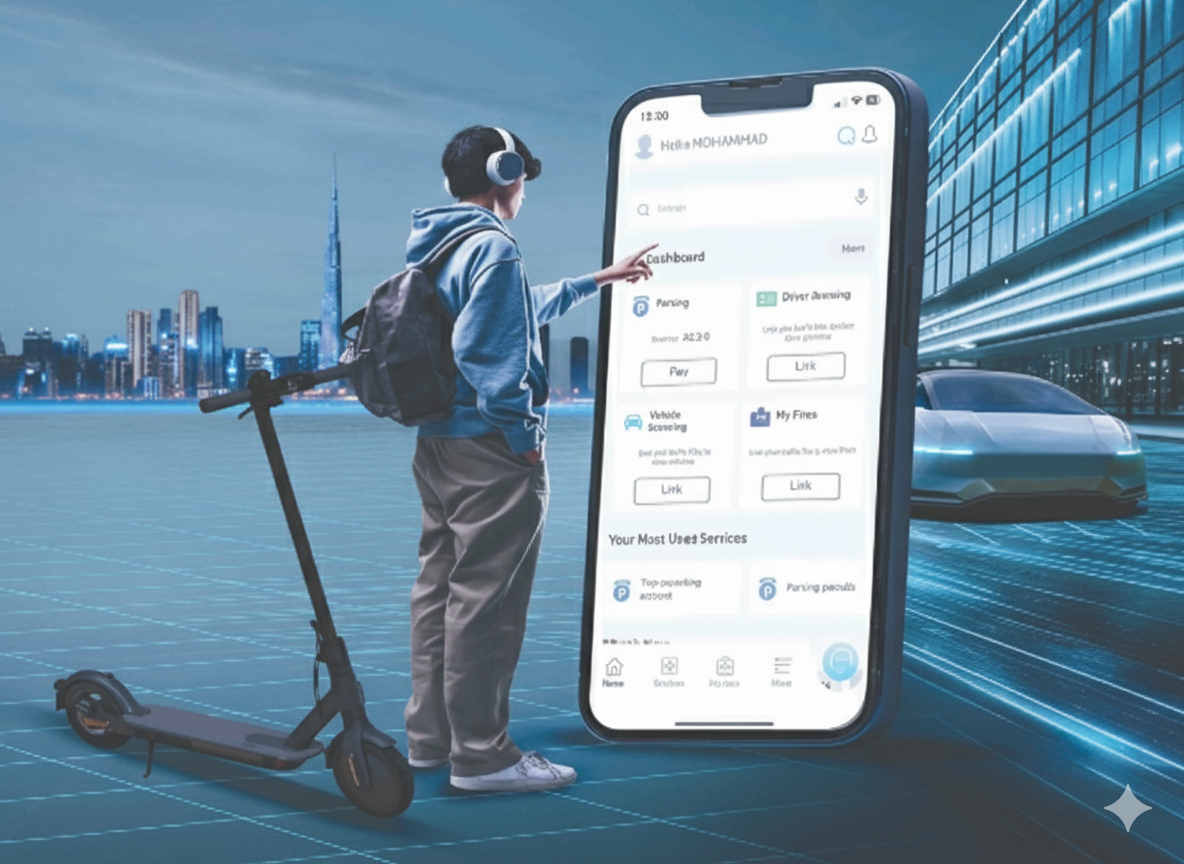
RTA Showcases 11 AI Projects at GITEX 2025: Dubai’s Smart Transport Vision
At GITEX Global 2025, the Roads and Transport Authority (RTA) spotlighted its leadership in intelligent mobility by revealing 11 AI projects designed to accelerate Dubai smart transportation and transform urban mobility. The exhibit underscored RTA’s ambition to fuse artificial intelligence with public transit to deliver safer, smoother, and more predictive services. While the gleaming displays captured attendees’ attention, the deeper narrative is one of strategy, technological foresight, and Dubai’s journey toward becoming a global model for AI-driven transport.
From the outset, RTA’s participation conveyed a clear message: AI is no longer just an experimental tool but a foundational pillar for the future of mobility in Dubai. The authority presented AI initiatives such as the Smart Connected Vehicles Network and AutoCheck 360, illustrating how predictive analytics and computer vision are being embedded across transport operations. RTA’s pavilion at GITEX offered visitors a chance to interact with the innovations, experience live demos, and better understand how technology is shaping daily commutes in the emirate.
Smart Connected Vehicles Network & AI Traffic Platforms
One of the headline AI initiatives unveiled is the Smart Connected Vehicles Network, which aims to establish a data-driven ecosystem where vehicles, infrastructure, and traffic systems communicate in real time. This project seeks to reduce congestion, cut delays, and improve vehicle flow across the road network. Complementing this is the Smart Traffic Solutions Platform, which utilizes AI and predictive modeling to optimize traffic light timings, anticipate bottlenecks, and dynamically adjust routing. Together, these systems are foundational for RTA’s vision of a seamless, responsive transport environment.
These AI traffic platforms extend further into the Smart Mobility Platform for Safe Cities, which monitors vehicle behavior on roadways, including school buses, delivery fleets, and commercial vehicles, to detect unsafe driving patterns or anomalies. By leveraging IoT sensors, geospatial analytics, and behavior modeling, RTA intends to embed proactive safety controls across its entire mobility network—essentially anticipating and preventing hazards before they occur.
AutoCheck 360, ARIIS & Smart Inspection Systems
Another standout among RTA AI projects is AutoCheck 360, a fully automated inspection system that uses computer vision and IoT integration to scan vehicles. The system dramatically reduces traditional manual inspection time—dropping it from 17 minutes to just 7 minutes—while improving accuracy and consistency. In parallel, RTA showcased the Safe Tracks Rail Inspection System (ARIIS), which combines laser scanning, high-resolution imaging, and AI algorithms to detect subtle rail defects and anomalies. ARIIS is engineered to enhance the safety and reliability of Dubai Metro and Tram infrastructure by catching issues before they escalate.
These inspection tools underscore RTA’s strategy to marry predictive maintenance and AI insights to reduce downtime, boost safety, and extend infrastructure lifespan. By automating data capture and analysis, RTA moves toward a future where insights drive maintenance action rather than reactive repair.
Trackless Tram, Aerial Taxi & Mobility Innovations
On the more visionary front, RTA unveiled its Trackless Tram project, a self-driving tram system that operates without fixed rails. Using optical guidance, LiDAR, GPS, and AI navigation, the tram can follow virtual tracks, adapt in real time to obstacles, and flexibly integrate into urban streetscapes. This system represents a bold step in redefining light rail mobility with lower infrastructure cost and greater adaptability.
RTA’s exhibit also included an aerial taxi (Joby S4) initiative currently in trial stages, which promises to cut travel times dramatically. For example, a flight from Dubai International Airport to Palm Jumeirah may take only 10 minutes once fully operational, compared to conventional road travel of up to 45 minutes. The aerial taxi concept positions Dubai at the frontier of urban air mobility, integrating seamlessly with ground-based public transportation and reinforcing Dubai’s image as a futuristic, multimodal city.
AI Factory, Digital Channels & Smart Kiosks
To support all these initiatives, RTA presented its AI Factory, a dedicated internal hub where data scientists, engineers, and domain specialists collaborate to develop self-learning systems that autonomously improve over time. This engine fuels innovation across all RTA AI projects, enabling continuous evolution in predictive models, decision-making systems, and adaptive algorithms.
Complementary to the backend innovations are customer-facing digital enhancements such as smart kiosks, interactive channels, and enhancements to the S’hail and RTA Dubai apps. Passengers can experience AI-powered features like trip planning suggestions, real-time alerts, multimodal route recommendations, and self-service interactions—all contributing to a smarter, more user-centric transport ecosystem.
Strategy, Vision & Broader Impacts
RTA’s rollout of these AI initiatives aligns with its Artificial Intelligence Strategy 2030, which aims to position RTA as a global leader in AI-enabled mobility. As Mattar Al Tayer emphasized, this participation at GITEX reaffirms RTA’s ambition to move from digital services toward predictive, autonomous smart services that meaningfully elevate the quality of life in Dubai. The authority’s integrated roadmap leverages AI, IoT, big data, and predictive analytics across transport operations to create an ecosystem that is responsive, efficient, and intelligently connected.
These projects collectively signal how Dubai is advancing its smart city ambitions. By embedding AI across public transit infrastructure, RTA is not only improving current service delivery but also building a foundation for autonomous decision systems, fully responsive traffic networks, and proactive mobility solutions. For residents, the benefit will manifest as shorter travel times, fewer delays, safer roads, and mobility that adapts to real-world conditions. For Dubai’s brand, these AI-powered systems spotlight its stature as a global innovation hub where transportation is both intelligent and future-ready.
Conclusion
RTA’s showcase of 11 AI projects and initiatives at GITEX 2025 reflects more than technological bravado—it defines a roadmap for Dubai’s transformation in public mobility. Projects such as AutoCheck 360, ARIIS, the Trackless Tram, aerial taxis, and intelligent traffic networks demonstrate how artificial intelligence is already reshaping how people move. As these projects progress from concept to deployment, they reinforce RTA’s commitment to innovation, operational excellence, and putting passengers at the center of a smarter, safer urban transport future.