


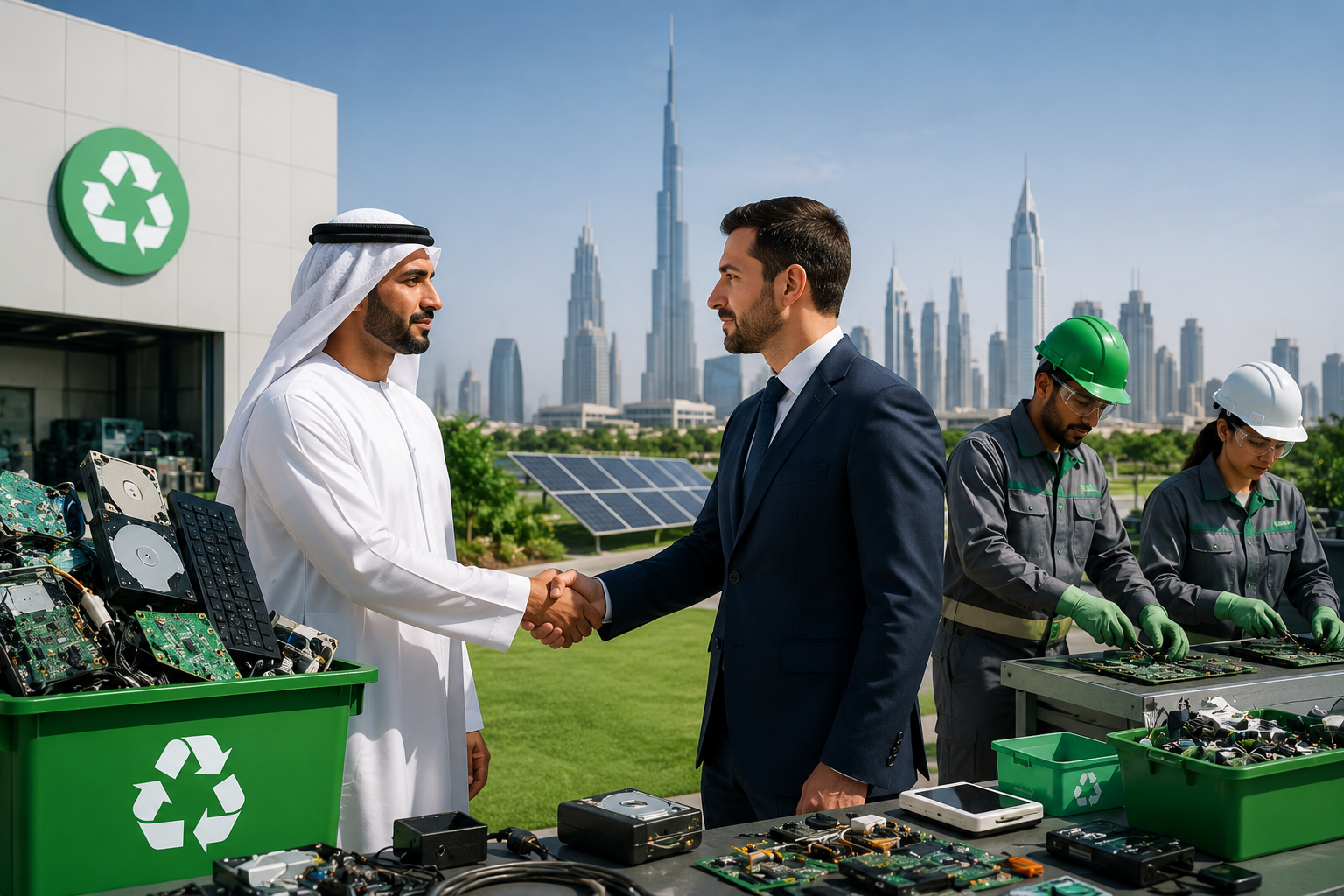
Dubai Municipality Boosts E-Waste Recycling Through New Partnership
As technology becomes increasingly integrated into everyday life, the volume of discarded electronic devices continues to grow at an unprecedented rate. Smartphones, laptops, household appliances, televisions, servers, networking equipment, and countless other electronic products have transformed modern living, but they also create one of the fastest-growing waste streams in the world. Addressing this challenge requires more than traditional waste collection systems. It demands innovative partnerships, advanced recycling infrastructure, and policies that encourage responsible consumption and disposal. The latest e-waste recycling Dubai initiative reflects this evolving approach, demonstrating how strategic collaboration can strengthen environmental protection while supporting the emirate’s long-term sustainability ambitions.
Dubai has consistently positioned itself as a leader in smart urban development and environmental stewardship. Over the past decade, the city has invested significantly in waste management modernization, circular economy initiatives, renewable energy projects, and sustainable infrastructure. The new partnership established by Dubai Municipality represents another milestone in this broader transformation, reinforcing the city’s commitment to creating efficient systems that reduce environmental impact while recovering valuable resources from discarded electronics.
The initiative arrives at a time when electronic waste has become one of the most pressing environmental issues facing governments and businesses worldwide. By strengthening electronic waste management, Dubai is not only responding to current challenges but also preparing its infrastructure for a future in which digital technologies will become even more deeply embedded across society.
Understanding the Growing Challenge of Electronic Waste
Electronic devices have become essential components of modern economies. Businesses rely on digital technologies for operations, governments increasingly provide services through online platforms, and consumers regularly upgrade personal devices to access improved functionality and performance. While this technological progress delivers enormous social and economic benefits, it also accelerates product replacement cycles and increases the volume of discarded equipment.
Unlike conventional household waste, electronic products contain a complex combination of materials, including plastics, glass, steel, aluminum, copper, rare earth elements, lithium, cobalt, and precious metals such as gold and silver. Many devices also contain hazardous substances that require careful handling during disposal. When electronic waste is improperly discarded, these materials can contaminate soil, groundwater, and ecosystems while posing risks to public health.
Globally, millions of tonnes of electronic waste are generated every year, yet only a relatively small proportion is formally collected and recycled. Much of the remaining waste is either stored indefinitely, exported through informal channels, or disposed of in landfill sites where valuable materials are permanently lost. These trends highlight the urgent need for more effective sustainable e-waste solutions that combine environmental responsibility with economic opportunity.
Dubai recognizes that electronic waste should not be viewed merely as refuse but as a valuable source of recoverable materials capable of supporting resource efficiency and reducing dependence on raw material extraction.
The Importance of Dubai Municipality's New Recycling Partnership
The newly established Dubai recycling partnership represents an important development in the city’s broader environmental strategy. Rather than relying solely on government-led collection programs, the initiative encourages greater collaboration between municipal authorities and specialized recycling organizations capable of processing electronic waste safely and efficiently.
This collaborative approach reflects a growing understanding that complex environmental challenges require coordinated action across multiple sectors. Municipal authorities provide regulatory leadership, policy direction, and public engagement, while private-sector partners contribute technical expertise, specialized recycling technologies, logistics capabilities, and operational efficiency.
The partnership creates an integrated framework designed to improve collection rates, expand recycling capacity, and increase public awareness regarding responsible electronic waste disposal. By combining institutional leadership with industry expertise, Dubai Municipality strengthens the city’s ability to manage increasing volumes of electronic waste while supporting national sustainability objectives.
Equally important, the initiative demonstrates that environmental responsibility is becoming embedded within broader urban development strategies rather than being treated as a separate policy area. Waste management, resource conservation, climate action, and economic diversification increasingly reinforce one another through integrated planning and collaborative partnerships.
Supporting Dubai's Vision for a Circular Economy
One of the defining characteristics of modern sustainability policy is the transition from linear economic models toward circular systems that maximize resource efficiency. Traditional production models often follow a simple sequence of extraction, manufacturing, consumption, and disposal. Circular economy principles seek to extend product lifecycles by promoting repair, refurbishment, reuse, remanufacturing, and recycling.
The e-waste recycling Dubai initiative aligns closely with these objectives by ensuring that valuable materials recovered from obsolete electronics can re-enter manufacturing supply chains instead of becoming landfill waste. Copper, aluminum, steel, precious metals, plastics, and other recovered resources can be processed and reused in new products, reducing demand for virgin materials while lowering environmental impacts associated with mining and extraction.
For rapidly growing cities such as Dubai, circular economy strategies provide important long-term advantages. Efficient resource management supports environmental resilience, strengthens economic competitiveness, and contributes to national sustainability targets. Electronic waste recycling represents one practical example of how circular economy principles can be successfully implemented within municipal operations.
By encouraging greater recovery of valuable materials, Dubai reduces unnecessary waste while creating opportunities for innovation, green investment, and sustainable industrial development.
Environmental Benefits Beyond Waste Reduction
Although reducing landfill volumes remains an important objective, effective electronic waste management delivers benefits that extend well beyond waste diversion alone. Proper recycling prevents hazardous substances from entering natural ecosystems, protecting soil quality, groundwater resources, and biodiversity.
Many electronic devices contain heavy metals and chemical compounds that require specialized treatment during dismantling and material recovery. Formal recycling facilities operate according to strict environmental standards designed to minimize emissions, prevent contamination, and ensure worker safety throughout processing activities.
At the same time, recovering recyclable materials significantly reduces energy consumption compared with extracting and refining raw resources. Manufacturing products from recycled metals often requires substantially less energy than producing equivalent materials from newly mined ores. These efficiencies contribute directly to lower greenhouse gas emissions and reduced environmental footprints across industrial supply chains.
As climate action becomes increasingly important within urban planning, investments in municipal recycling initiatives provide practical mechanisms for reducing carbon emissions while supporting broader sustainability commitments.
Creating Economic Opportunities Through Sustainable Resource Recovery
Electronic waste is frequently described as one of the world’s fastest-growing urban mines because discarded devices contain significant quantities of valuable materials. Gold, silver, palladium, copper, lithium, and rare earth elements recovered through responsible recycling can generate considerable economic value while supporting domestic manufacturing and industrial supply chains.
The expansion of sustainable e-waste solutions therefore creates opportunities extending beyond environmental protection. Recycling industries generate skilled employment, encourage investment in advanced processing technologies, and stimulate innovation across waste management, logistics, engineering, and materials science.
Dubai’s growing emphasis on green industries aligns closely with this opportunity. As the city continues diversifying its economy beyond traditional sectors, environmental technologies and circular economy businesses are expected to play increasingly important roles within future economic development strategies.
The partnership also encourages greater corporate participation in sustainability initiatives. Organizations managing significant volumes of obsolete electronic equipment now have clearer pathways for responsible disposal while demonstrating environmental responsibility to customers, investors, employees, and regulatory authorities.
Encouraging Greater Public Awareness and Responsible Consumer Behaviour
Infrastructure alone cannot solve the electronic waste challenge. Public participation remains essential for achieving meaningful recycling outcomes. Consumers and businesses must understand why responsible disposal matters and how electronic waste differs from ordinary household refuse.
The new partnership contributes to this objective by strengthening public engagement and encouraging greater awareness of available recycling services. Educational initiatives help residents recognize the environmental importance of proper disposal while increasing confidence in formal recycling systems.
Corporate organizations similarly benefit from clearer guidance regarding electronic asset management. Businesses frequently replace computers, servers, communication equipment, and office electronics as part of digital transformation initiatives. Responsible recycling enables organizations to align technology modernization with environmental sustainability objectives.
As awareness continues growing, recycling increasingly becomes viewed not simply as a regulatory obligation but as an important contribution to environmental stewardship and responsible resource management.
Innovation Strengthening Municipal Waste Management
Dubai has consistently embraced technological innovation as a driver of public service improvement. Smart infrastructure, digital government services, artificial intelligence, and data-driven planning increasingly influence how the city manages transportation, utilities, healthcare, public safety, and environmental protection.
Waste management is evolving in a similar direction. Advanced collection systems, digital tracking technologies, automated sorting equipment, and specialized recycling processes improve operational efficiency while enhancing environmental outcomes.
The latest Dubai recycling partnership demonstrates how innovation extends beyond technology alone. Collaborative governance models that bring together municipalities, private companies, environmental specialists, and community organizations create stronger institutional capacity for addressing complex sustainability challenges.
As urban populations continue expanding, these integrated approaches will become increasingly important for maintaining efficient, resilient municipal services capable of meeting future environmental expectations.
Reinforcing Dubai's Global Sustainability Leadership
Dubai has spent many years building an international reputation as a city that combines economic growth with ambitious sustainability initiatives. Investments in renewable energy, sustainable mobility, green buildings, biodiversity conservation, and resource efficiency reflect a long-term commitment to responsible urban development.
Strengthening e-waste recycling Dubai further reinforces this position. Rather than reacting to environmental challenges after they emerge, the city continues implementing proactive strategies designed to anticipate future needs and establish resilient systems capable of supporting sustainable growth.
International investors, multinational companies, and environmentally conscious businesses increasingly evaluate cities based on environmental governance, infrastructure quality, and sustainability performance. Effective electronic waste management contributes positively to these assessments while supporting Dubai’s attractiveness as a destination for investment and innovation.
The partnership also aligns with growing global expectations surrounding Environmental, Social, and Governance (ESG) performance. Businesses operating within Dubai benefit from municipal initiatives that encourage responsible resource management while supporting their own sustainability commitments.
Looking Ahead
The new partnership to strengthen e-waste recycling Dubai represents more than an enhancement of municipal waste services. It reflects a broader vision in which environmental responsibility, technological innovation, and economic development operate together to support sustainable urban growth.
As electronic devices become increasingly central to modern life, effective recycling systems will become equally important components of resilient cities. Responsible electronic waste management protects natural resources, reduces environmental risks, recovers valuable materials, and supports circular economy objectives that benefit businesses, communities, and future generations.
Dubai’s continued investment in municipal recycling initiatives demonstrates that sustainability is becoming deeply integrated into every aspect of urban planning and public administration. Through collaborative partnerships, innovative technologies, and long-term strategic planning, the emirate is creating an environmental framework capable of supporting continued economic expansion while preserving valuable natural resources.
The latest initiative highlights how forward-thinking leadership can transform environmental challenges into opportunities for innovation and sustainable growth. As the city continues expanding its environmental programs, e-waste recycling Dubai is likely to become an increasingly important pillar of the emirate’s vision for a cleaner, smarter, and more resource-efficient future.