


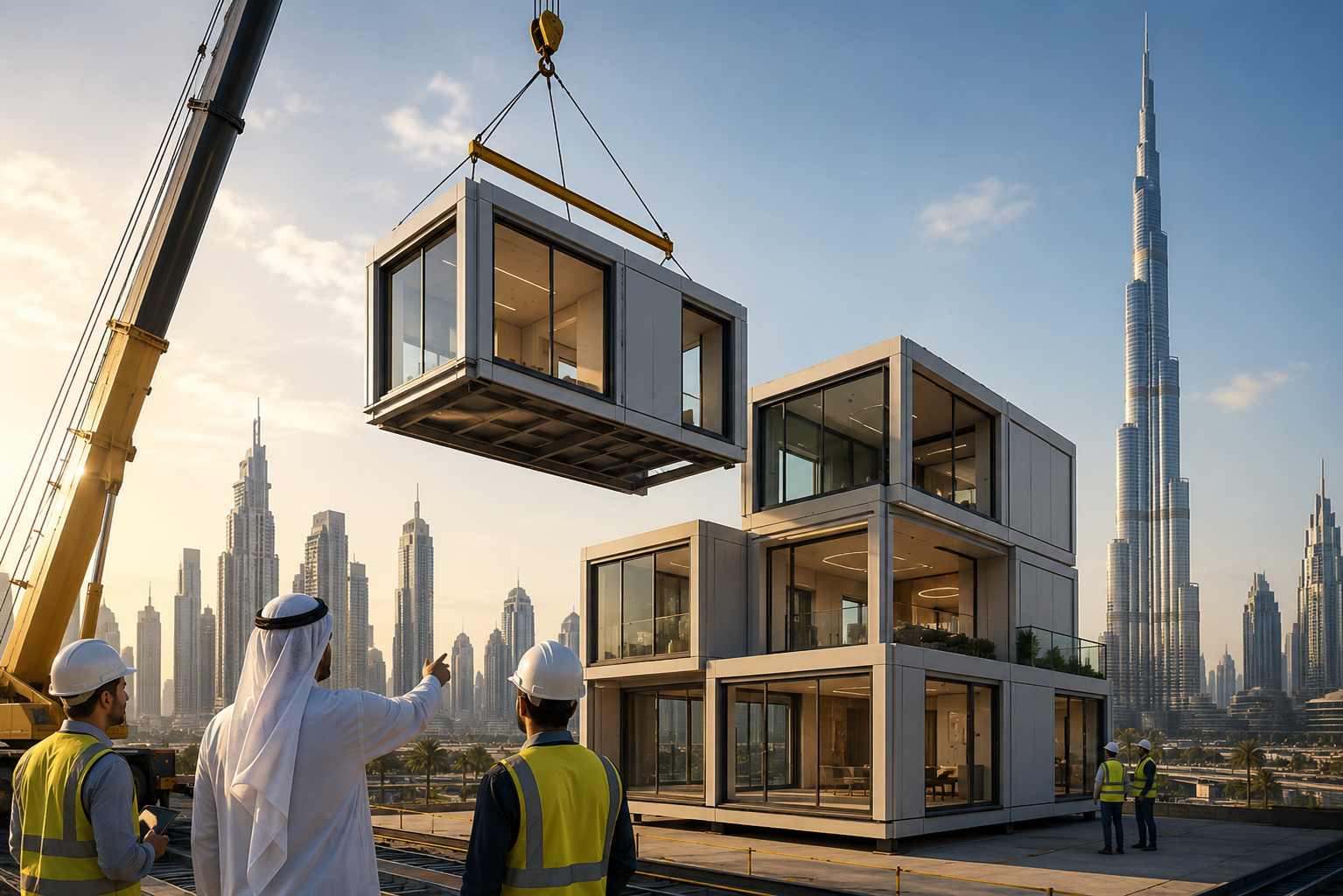
A New Chapter for Construction Innovation in Dubai
Dubai has consistently demonstrated its ability to redefine urban development through bold planning, advanced engineering, and a willingness to embrace emerging technologies. From iconic skyscrapers to world-renowned infrastructure projects, the emirate has earned global recognition for pushing the boundaries of modern construction. The recent approval of an innovative modular building system Dubai represents another important milestone in that journey, signaling a new phase in how buildings may be designed, manufactured, and delivered across the city.
As the demand for sustainable cities, faster project completion, and efficient resource management continues to increase, construction companies are under growing pressure to adopt smarter methods without compromising quality or safety. Traditional construction methods remain effective for many developments, but they often involve longer timelines, higher material waste, and increased labor requirements. Modular construction introduces a different approach that addresses many of these challenges while supporting Dubai’s long-term vision for innovation, sustainability, and economic diversification.
The approval of modular building technology is more than a regulatory decision. It reflects Dubai’s broader commitment to creating an ecosystem where innovation becomes a practical tool for improving urban development, enhancing productivity, and delivering infrastructure that meets the expectations of a rapidly growing global city.
Understanding the Modular Building System
A modular building system is a modern construction methodology in which significant portions of a building are manufactured within controlled production facilities before being transported to the project site for final assembly. Unlike conventional construction, where every stage takes place on-site, modular construction separates manufacturing from installation, allowing both activities to progress simultaneously.
This process relies on standardized engineering principles, precision manufacturing, and advanced quality control systems to produce structural components that meet strict performance standards. Once delivered to the construction site, these modules are connected to form complete buildings with minimal disruption to surrounding environments.
Although prefabrication has existed for many years, today’s prefabricated building systems are far more sophisticated. Digital engineering tools, Building Information Modeling (BIM), automation, robotics, and advanced materials have transformed modular construction into a highly reliable solution suitable for residential, commercial, hospitality, healthcare, educational, and industrial developments.
Dubai’s recognition of this technology demonstrates confidence in its ability to meet international engineering standards while supporting the city’s ambitious infrastructure objectives.
Why Dubai Is Embracing Innovative Construction Technologies
The construction sector is experiencing one of its most significant periods of transformation. Around the world, governments and developers are exploring technologies capable of improving efficiency, reducing environmental impact, and increasing project certainty. Dubai has positioned itself at the forefront of this movement by continuously encouraging innovation across multiple industries, including real estate, transportation, logistics, and urban planning.
The approval of a modular building system Dubai aligns closely with the emirate’s long-term development strategies. As population growth, economic expansion, and international investment continue to drive demand for residential and commercial properties, developers require construction methods capable of delivering projects more efficiently while maintaining exceptional quality.
Innovative construction technologies also support Dubai’s ambitions to become one of the world’s smartest cities. Modern urban environments increasingly rely on digital infrastructure, sustainable development practices, and efficient resource management. Modular construction complements these priorities by enabling greater manufacturing precision, improved material utilization, and enhanced project coordination.
This strategic direction reinforces Dubai’s reputation as a city willing to adopt practical innovations that improve both public infrastructure and private sector competitiveness.
Accelerating Project Delivery Without Compromising Quality
One of the most significant advantages of modular construction is the ability to reduce project delivery times. Traditional construction often depends heavily on sequential activities performed under changing weather conditions and varying site circumstances. Delays affecting one stage frequently impact the entire project schedule.
Modular construction changes this dynamic by allowing manufacturing and site preparation to occur simultaneously. While foundations and infrastructure are being developed on-site, structural modules are produced in controlled factory environments. Once both stages are complete, installation proceeds rapidly, significantly reducing overall construction timelines.
This accelerated approach creates important advantages for developers, investors, contractors, and property owners. Faster completion enables earlier occupancy, quicker revenue generation, and improved capital efficiency. Businesses can begin operations sooner, residential buyers receive homes more quickly, and public infrastructure becomes operational with reduced delays.
Importantly, increased speed does not require sacrificing quality. Factory-controlled manufacturing environments often deliver greater consistency than traditional site-based construction because production processes are standardized, closely monitored, and less affected by external variables.
Supporting Sustainability Through Smarter Construction
Sustainability has become one of the defining priorities of the global construction industry. Buildings account for substantial resource consumption, material usage, and carbon emissions throughout their lifecycle. As environmental expectations continue to evolve, developers increasingly seek methods capable of minimizing environmental impact while maintaining economic viability.
Modular construction offers several sustainability advantages that align closely with Dubai’s environmental objectives. Factory manufacturing enables more accurate material planning, reducing unnecessary waste generated during construction. Controlled production environments also improve recycling opportunities by allowing surplus materials to be reused more efficiently.
Transportation efficiency can also improve when project logistics are carefully coordinated. Rather than delivering numerous individual materials continuously throughout a project, modular systems consolidate deliveries into larger completed components, reducing overall site traffic and associated emissions.
Energy efficiency during manufacturing, combined with higher precision assembly, often results in better building performance over the long term. Improved insulation, tighter construction tolerances, and consistent installation quality contribute to lower operational energy consumption throughout a building’s lifespan.
By encouraging innovative construction practices, Dubai strengthens its broader commitment to sustainable urban development while supporting global efforts to reduce environmental impact within the built environment.
Enhancing Safety and Productivity Across Construction Projects
Construction safety remains a critical priority across every major development market. Traditional construction sites involve numerous simultaneous activities performed under varying environmental conditions. Managing these risks requires significant coordination and continuous supervision.
Modular construction shifts much of the manufacturing process into controlled industrial facilities where working conditions are more predictable. Standardized workflows, specialized equipment, and consistent production environments contribute to improved occupational safety while reducing exposure to common construction hazards.
Higher productivity is another important benefit. Factory-based production allows skilled workers to specialize in specific manufacturing processes, improving efficiency through repetition, training, and continuous quality improvement. Digital technologies further enhance precision by integrating engineering models directly into manufacturing operations.
These productivity improvements benefit the entire construction ecosystem. Contractors gain greater scheduling certainty, developers experience improved cost predictability, and clients receive projects completed according to established timelines and quality expectations.
Digital Engineering Driving the Future of Building Technology
Modern Dubai building technology increasingly relies on digital engineering solutions that improve collaboration, accuracy, and project management. Modular construction naturally integrates with many of these technologies because manufacturing requires highly detailed digital planning before physical production begins.
Building Information Modeling enables architects, engineers, manufacturers, and contractors to collaborate using shared digital models throughout project development. Potential design conflicts can be identified before manufacturing begins, reducing costly modifications during construction.
Automation, robotics, artificial intelligence, and advanced manufacturing technologies further strengthen modular construction capabilities. These innovations improve production accuracy while enabling manufacturers to produce increasingly complex architectural designs without sacrificing efficiency.
Dubai’s ongoing investment in digital transformation creates an ideal environment for these technologies to flourish. As more organizations adopt integrated digital workflows, modular construction will likely become an increasingly important component of the city’s broader construction ecosystem.
Economic Benefits for Developers, Investors, and Property Owners
The approval of modular building systems also carries significant economic implications. Construction represents one of the largest contributors to Dubai’s economy, influencing employment, investment, tourism, infrastructure, and real estate development.
Developers benefit from greater schedule certainty, improved resource utilization, and more predictable project costs. Reduced construction durations can improve return on investment by accelerating property sales, leasing activities, and operational revenues.
Investors gain confidence from projects that demonstrate lower execution risk and greater delivery certainty. Improved construction efficiency also supports housing supply by enabling developers to complete larger numbers of projects within shorter timeframes.
Property owners ultimately benefit through improved building quality, faster occupancy, and potentially lower lifecycle maintenance costs resulting from higher manufacturing precision.
These economic advantages contribute to a healthier construction market capable of supporting Dubai’s continued growth as a global investment destination.
Reinforcing Dubai's Position as a Global Construction Leader
Dubai has built an international reputation by consistently embracing forward-thinking solutions across infrastructure, architecture, and urban development. The approval of an innovative modular building system reflects this broader philosophy of continuous improvement rather than maintaining conventional approaches simply because they have been used historically.
As international cities compete to attract investment, talent, and business activity, infrastructure quality increasingly influences competitiveness. Developers, multinational corporations, and institutional investors seek locations where construction projects can be delivered efficiently, sustainably, and predictably.
By supporting modular construction, Dubai strengthens its ability to meet these expectations while encouraging industry participants to adopt technologies that improve long-term performance.
The decision also demonstrates confidence in the capabilities of modern engineering and manufacturing. Rather than viewing modular construction as an alternative solution, Dubai increasingly recognizes it as an important component of future urban development capable of complementing traditional construction methods across a wide variety of project types.
Looking Ahead
The approval of the modular building system Dubai marks an important step toward the future of construction in one of the world’s fastest-growing urban centers. As demand for housing, commercial developments, hospitality projects, healthcare facilities, and public infrastructure continues to increase, construction methodologies must evolve to meet changing expectations around speed, sustainability, quality, and efficiency.
Modular construction offers practical solutions to many of these challenges by combining advanced manufacturing, digital engineering, and sustainable building practices into a highly coordinated development process. For developers, investors, contractors, and policymakers, this approach creates opportunities to improve project outcomes while supporting broader economic and environmental objectives.
Dubai’s willingness to embrace innovative construction technologies reinforces its position as a global leader in urban development. The city continues demonstrating that future-ready infrastructure depends not only on ambitious architectural visions but also on smarter ways of building them. As modular construction becomes increasingly integrated into the emirate’s development landscape, it is likely to influence the next generation of projects that define Dubai’s skyline and strengthen its reputation as a world-class center for innovation.