


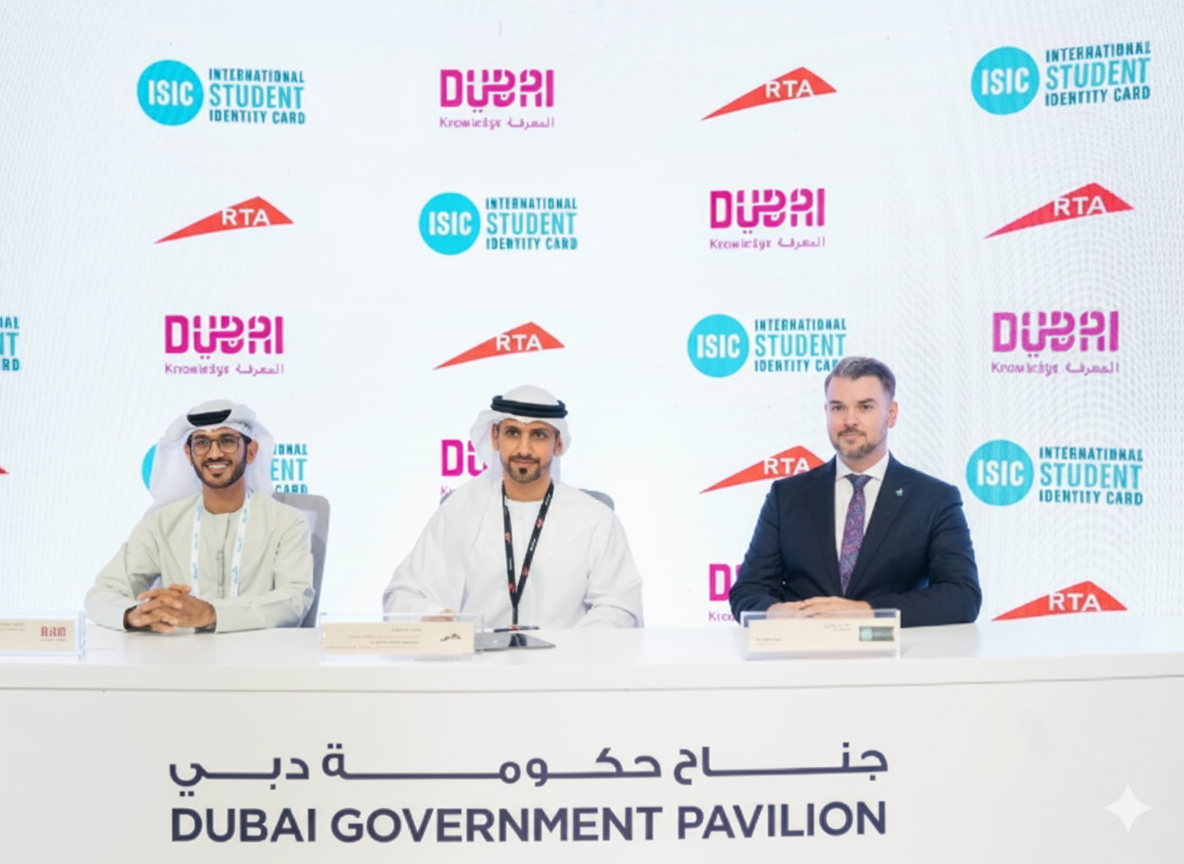
RTA Signs Three MOUs at GITEX 2025 to Expand nol Ecosystem
During GITEX Global 2025, the Roads and Transport Authority (RTA) of Dubai formalized three strategic agreements through Memoranda of Understanding (MOUs) aimed at extending the reach and utility of its nol card system. As reported by RTA, these partnerships—with the Knowledge and Human Development Authority (KHDA) in collaboration with GTS Alive, Parkin, and PayPal—are designed to integrate nol across more sectors, streamline payments, and enhance the smart mobility experience across Dubai. This move demonstrates RTA’s proactive strategy to embed its transportation payment infrastructure deeper into everyday services beyond transit.
Expanding nol Payments with KHDA and GTS Alive
The first MOU signed at GITEX connects RTA with KHDA and GTS Alive (representing the International Student Identity Card Association in the Middle East) to launch the “Study in Dubai – nol ISIC” program. Under this agreement, students across Dubai’s higher education institutions will have access to a combined nol-ISIC card that works not only for public transport but also grants lifestyle discounts, domestic services access, and educational perks. According to RTA, this integration supports student convenience, reduces the proliferation of separate payment cards, and enhances the appeal of nol as a unified payments platform.
KHDA official statements highlighted that this initiative fits with Dubai’s vision for smart education and inclusive services for students. The collaborative framework provides an opportunity to deepen the role of digital wallets in student life, intertwining mobility, discounts, and campus access into a single, seamless experience.
Nol-Parkin Collaboration: Smart Parking Integration
The second MOU announced at GITEX 2025 brings Parkin PJSC into the nol network, enabling nol card acceptance at parking facilities managed by Parkin across the emirate. RTA and Parkin aim to integrate parking payments directly via nol, reducing friction for drivers and simplifying transitions between public transit and private vehicle parking. By linking parking systems to the transit payment ecosystem, this partnership underscores RTA’s ambition to blur the boundaries between transport modes and urban services.
According to RTA, this cooperation supports operational efficiency, improves customer satisfaction, and encourages the use of public transport by making last-mile connectivity smoother. Parkin’s leadership commented that this agreement marks a step toward fully interoperable urban mobility systems, where parking and transit payments coexist within one digital wallet.
Nol-Parkin Collaboration: Smart Parking Integration
The second MOU announced at GITEX 2025 brings Parkin PJSC into the nol network, enabling nol card acceptance at parking facilities managed by Parkin across the emirate. RTA and Parkin aim to integrate parking payments directly via nol, reducing friction for drivers and simplifying transitions between public transit and private vehicle parking. By linking parking systems to the transit payment ecosystem, this partnership underscores RTA’s ambition to blur the boundaries between transport modes and urban services.
According to RTA, this cooperation supports operational efficiency, improves customer satisfaction, and encourages the use of public transport by making last-mile connectivity smoother. Parkin’s leadership commented that this agreement marks a step toward fully interoperable urban mobility systems, where parking and transit payments coexist within one digital wallet.
Nol and PayPal: Digital Payments Expansion
The third MOU at GITEX aligns RTA with PayPal Middle East & Africa, enabling expanded nol card integration with PayPal’s digital payments ecosystem. This agreement allows users to link their nol accounts to PayPal for a broader range of transactions—such as retail, e-commerce, events, and entertainment—beyond purely transit functions. According to statements from both parties, this move promotes cashless payments, supports digital inclusion, and strengthens Dubai’s positioning as a smart city with integrated financial and mobility services.
RTA framed this partnership as a strategic drive toward a unified payments infrastructure, where nol functions as more than a transit card—it becomes a universal digital wallet accessible via trusted payment networks like PayPal. The collaboration is expected to accelerate user adoption and interoperability across sectors.
Strategic Significance of the MOUs
These three MOUs collectively represent a pivotal evolution in how RTA positions nol—not just as a transit card but as a multifunctional payments ecosystem within Dubai’s urban fabric. By linking education, parking, retail, and transit, RTA is expanding the nol footprint into everyday life, driving synergies between public and private sectors. This supports Dubai’s goal of seamless, integrated smart mobility.
From a strategic standpoint, these partnerships reinforce RTA’s emphasis on digital transformation, interoperability, and improved user experience. They align with Dubai’s smart city ambitions by minimizing silos between sectors and enabling a more fluid, connected mobility and payments infrastructure. For nol users, these MOUs signal convenience, flexibility, and a growing ecosystem of services accessible through a single card or digital wallet.
Considerations and Challenges Ahead
While the vision is compelling, realizing these integrations will require overcoming technical, regulatory, and operational challenges. Ensuring real-time interoperability between systems like transit gates, parking terminals, and merchant checkouts demands robust APIs, secure data exchange, and reliable settlement processes. Furthermore, user onboarding, security, and privacy will be critical as nol becomes more central to daily life. RTA must also coordinate with numerous stakeholders—educational institutions, parking operators, merchants, and payment networks—to execute load-and-go services seamlessly.
Monitoring and maintaining quality across different services, handling transaction failures, and preserving system resilience will be vital for sustaining user trust. The success of these MOUs will rest heavily on execution, user experience, and the continued expansion of the nol ecosystem in ways that feel natural to residents and visitors.
Implications for Dubai’s Mobility Landscape
By taking these bold steps at GITEX 2025, RTA is redefining the role of transport authorities in the digital age. The MOUs reflect a shift from physical transit operations to platform-oriented service providers bridging mobility, payments, and daily commerce. This evolution reinforces Dubai’s position at the forefront of smart transportation and mobility innovation in the region.
For users, the promise is compelling: a hollistic urban mobility experience where transit, parking, retail, and student life are interconnected through common digital infrastructure. For RTA, these agreements herald a new era of integrated mobility services, deeper data insights, and greater value creation through partnerships and ecosystems.
Excellent overview
Great breakdown