


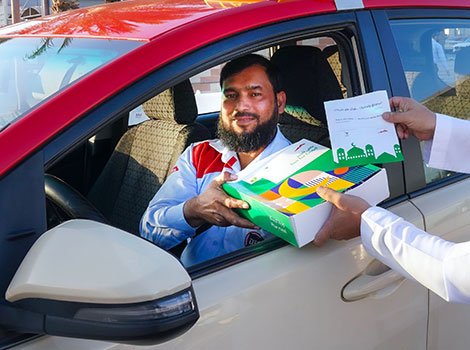
RTA Awareness Campaigns Distribute 40,000 Iftar Meals to Taxi Drivers and Delivery Riders During Ramadan
The RTA awareness campaigns launched during the holy month of Ramadan have once again highlighted the Roads and Transport Authority’s strong commitment to social responsibility and community welfare. As part of its annual Ramadan initiatives in UAE, the RTA distributed 40,000 iftar meals to taxi drivers, delivery bike riders, and workers across the emirate, reinforcing its role not only as a transport regulator but also as a community-focused public institution. This large-scale outreach reflects a broader effort to support frontline workers who continue to provide essential services throughout Ramadan while observing the fast.
The initiative was designed to reach taxi drivers stationed across key locations, delivery riders navigating busy streets, and workers contributing to the smooth functioning of Dubai’s infrastructure. By organizing coordinated RTA awareness campaigns, the authority ensured that thousands of individuals breaking their fast during working hours received meals in a timely and respectful manner. The campaign embodies the spirit of generosity and solidarity that defines Ramadan, while also emphasizing the importance of safety, well-being, and appreciation for those working long hours on the road.
Strengthening Community Welfare and Road Safety
Beyond the distribution of iftar meals, the RTA awareness campaigns also serve as an opportunity to reinforce key safety messages among taxi drivers and delivery riders. Ramadan often brings changes in traffic patterns, working hours, and driver concentration levels due to fasting. By engaging directly with drivers during meal distribution, the authority integrates awareness messaging related to road safety, responsible driving, and compliance with transport regulations. This combination of humanitarian support and educational outreach strengthens the impact of the initiative.
Taxi drivers and delivery riders represent a critical segment of Dubai’s transport ecosystem. They connect residents to workplaces, deliver essential goods, and ensure that mobility services remain uninterrupted. Recognizing their contribution through Ramadan initiatives in UAE fosters a culture of mutual respect between regulators and service providers. It also highlights how public authorities can combine operational oversight with meaningful community engagement.
The scale of distributing 40,000 iftar meals demonstrates careful planning and collaboration. Coordinated logistics ensured that meals were delivered efficiently at high-traffic areas, taxi ranks, and worker accommodations. Such organization reflects the RTA’s operational expertise and its ability to extend that expertise beyond infrastructure management into social outreach programs that directly impact people’s lives.
A Human-Centered Approach to Transportation Leadership
The RTA awareness campaigns illustrate a human-centered approach to governance within the transportation sector. While infrastructure projects and regulatory frameworks remain central to the authority’s mandate, initiatives like these reveal a broader understanding of stakeholder needs. By focusing on taxi drivers, delivery riders, and workers, the RTA acknowledges the individuals who form the backbone of daily mobility and logistics services.
Ramadan initiatives in UAE often emphasize unity and compassion, values that resonate strongly within the country’s diverse population. Through this campaign, the RTA strengthens its connection with multicultural communities that contribute to Dubai’s economic growth. Delivery riders and drivers often work extended hours to meet consumer demand, especially during Ramadan evenings when activity increases. Providing iftar meals not only offers immediate relief but also symbolizes institutional appreciation.
The campaign also aligns with the UAE’s broader commitment to social responsibility and worker welfare. By integrating awareness messaging with direct assistance, the RTA awareness campaigns reinforce a holistic model of community engagement. This approach positions the authority as a leader in combining transport management with social impact initiatives.
Enhancing Public Trust and Institutional Credibility
Community-focused programs such as the distribution of 40,000 iftar meals enhance public trust in government institutions. When residents observe tangible efforts to support workers, it strengthens confidence in the authority’s commitment to inclusivity and well-being. The visibility of these RTA awareness campaigns contributes to a positive perception of Dubai’s transport sector and its regulatory leadership.
For taxi drivers and delivery riders, the initiative serves as both practical support and moral encouragement. Fasting while working in demanding conditions can be challenging, particularly for those operating vehicles for extended periods. Receiving an iftar meal at sunset allows them to break their fast safely and comfortably without interrupting essential services. This thoughtful coordination reinforces the message that worker welfare remains a priority within the broader framework of transportation governance.
Moreover, such Ramadan initiatives in UAE provide valuable opportunities for engagement and dialogue. Direct interaction between RTA representatives and transport workers encourages feedback, fosters understanding, and strengthens collaborative relationships. These interactions can contribute to improved service quality and enhanced compliance with safety standards.
Conclusion: Driving Social Impact Beyond Mobility
The RTA awareness campaigns that distributed 40,000 iftar meals to taxi drivers, delivery riders, and workers during Ramadan demonstrate how transportation authorities can extend their influence beyond roads and regulations. By blending humanitarian outreach with road safety awareness, the initiative reflects a comprehensive commitment to community welfare and responsible governance. In doing so, the RTA reinforces its leadership in both mobility services and social responsibility.
As Ramadan initiatives in UAE continue to inspire acts of generosity and unity, the RTA’s efforts stand as a meaningful example of institutional compassion. Readers interested in community engagement, worker support programs, and transportation sector leadership can look to these campaigns as evidence of how public service organizations can create lasting positive impact. Staying informed about similar RTA awareness campaigns offers insight into the evolving relationship between infrastructure management and community development.
This article is based on official information released by the Roads and Transport Authority regarding its Ramadan awareness campaigns and iftar meal distribution initiative. The analysis and commentary presented here are original editorial content intended for informational purposes.
© 2026 Roads and Transport Authority. All rights reserved.