


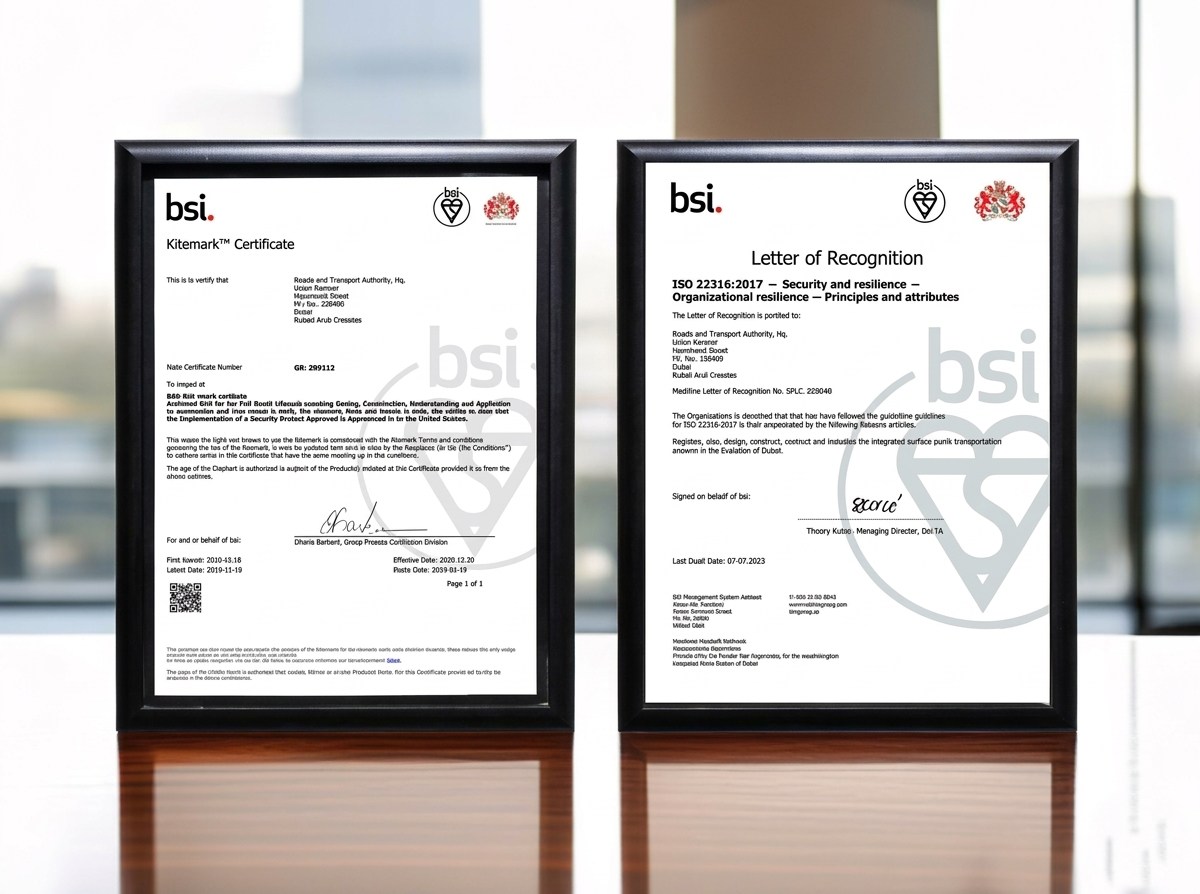
ISO Certification Strengthens Leadership in Resilience and Security
In an increasingly complex and interconnected world, organizations must strengthen their ability to anticipate risks, protect critical data, and manage essential assets effectively. Achieving internationally recognized ISO certification has therefore become a powerful benchmark for operational excellence and leadership in governance. The recent recognition of the Roads and Transport Authority for its commitment to resilience, information security, and asset management highlights how strategic compliance with global standards can reinforce an organization’s reputation for reliability and innovation. This ISO certification for organizational resilience reflects a broader effort to build strong governance frameworks capable of protecting infrastructure, data, and public services in a rapidly evolving digital landscape.
The certifications demonstrate the authority’s ability to integrate internationally recognized management systems that support resilience and risk mitigation. By aligning operational processes with global standards, organizations can strengthen internal controls, enhance decision-making, and create a more robust framework for managing uncertainty. These certifications represent more than compliance; they signal a proactive approach to safeguarding critical infrastructure and ensuring that systems remain secure, resilient, and capable of supporting long-term growth.
Understanding the Importance of ISO Certification
International Organization for Standardization (ISO) certifications are widely recognized as benchmarks of excellence across multiple industries. These standards provide structured frameworks that guide organizations in building efficient systems for governance, operational continuity, and risk management. When an institution earns ISO certifications in areas such as resilience, information security, and asset management, it demonstrates its ability to operate according to globally recognized best practices.
ISO resilience certification in particular focuses on strengthening an organization’s preparedness to respond to disruptions, whether they arise from cyber threats, operational failures, or external crises. By implementing structured resilience frameworks, organizations are better equipped to maintain continuity during emergencies and recover quickly from unexpected events. In sectors such as transportation and public infrastructure, where service continuity is critical, resilience planning becomes an essential component of operational strategy.
Information security certification further emphasizes the importance of protecting sensitive data and digital systems from evolving cyber threats. As digital transformation accelerates across industries, organizations face increasing risks related to cybercrime, data breaches, and system vulnerabilities. Adhering to global information security standards allows institutions to build secure digital environments that protect both operational systems and user data.
Asset management certification complements these efforts by ensuring that physical and digital assets are managed efficiently throughout their lifecycle. From infrastructure maintenance to technology investments, structured asset management frameworks enable organizations to optimize resources while maintaining reliability and performance.
Strengthening Organizational Leadership Through Global Standards
Achieving ISO certification in resilience, information security, and asset management represents a significant milestone for any organization seeking to establish itself as a leader in governance and operational excellence. These certifications reflect a comprehensive approach to managing complex systems while maintaining high standards of accountability and transparency.
Organizations that invest in ISO-aligned management systems often experience improvements in efficiency, risk management, and strategic planning. The structured frameworks provided by these standards encourage consistent processes, clear accountability, and continuous improvement. By integrating resilience planning with information security leadership and asset management best practices, institutions can create a cohesive governance structure that supports long-term success.
For large infrastructure operators and government authorities, such certifications also enhance public trust. Citizens and stakeholders expect essential services to remain reliable, secure, and resilient in the face of evolving challenges. Achieving recognized certifications signals that the organization has taken concrete steps to ensure that its operations meet internationally accepted standards of excellence.
Information Security Leadership in a Digital Era
Information security has evolved into one of the most important strategic priorities for modern organizations. Data is now a central component of operational efficiency, customer engagement, and innovation. However, this digital transformation also introduces new vulnerabilities that must be carefully managed.
ISO-based information security frameworks help organizations establish policies, procedures, and controls designed to safeguard sensitive information. These frameworks promote proactive risk assessment, incident response planning, and continuous monitoring of digital systems. By implementing these practices, organizations can significantly reduce the likelihood of cyber incidents while improving their ability to respond quickly when threats arise.
For public sector institutions, information security leadership also carries broader societal implications. Protecting data ensures the privacy of citizens while safeguarding essential services that communities rely upon daily. The adoption of internationally recognized security standards demonstrates a commitment to responsible digital governance and ethical data management.
Asset Management as a Strategic Advantage
Effective asset management is another critical component of organizational resilience and operational success. Infrastructure, technology systems, and operational equipment represent valuable resources that must be carefully maintained and managed over time. ISO asset management frameworks provide structured methods for monitoring the performance, lifecycle, and value of these assets.
Organizations that adopt asset management best practices often experience improved resource efficiency and better long-term planning. By tracking asset performance and anticipating maintenance needs, institutions can reduce operational disruptions while maximizing the lifespan of critical infrastructure. This approach also supports more informed investment decisions, ensuring that resources are allocated strategically.
When combined with resilience planning and information security frameworks, asset management becomes a powerful tool for strengthening institutional stability. Organizations gain a clearer understanding of their operational capabilities while building systems that support sustainable growth and innovation.
A Forward-Looking Approach to Organizational Excellence
The recognition achieved through ISO certification reflects an organization’s dedication to continuous improvement and global best practices. By prioritizing resilience, information security, and asset management, institutions can create strong governance systems that support both operational stability and future innovation.
In an era defined by rapid technological advancement and increasing risk complexity, organizations must adopt proactive strategies that anticipate challenges before they arise. ISO certifications provide the frameworks necessary to build these strategies, enabling institutions to remain agile, secure, and resilient in the face of uncertainty.
As businesses and government organizations continue to navigate evolving risks and opportunities, the pursuit of international standards will remain an essential part of strategic leadership. Institutions that invest in resilience and security today are laying the foundation for stronger, more reliable operations in the future.