


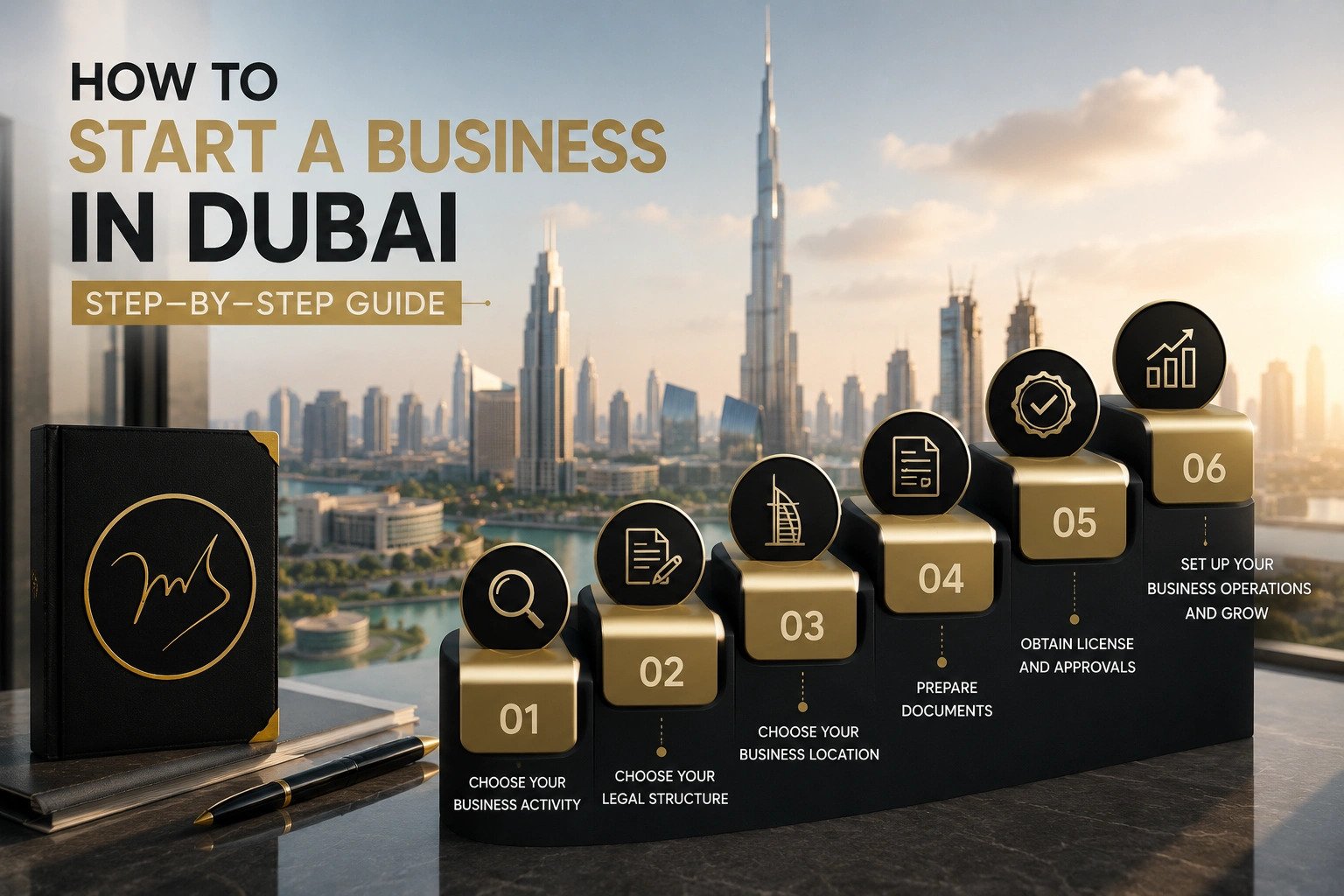
Why Dubai Has Become a Global Business Destination
Dubai has established itself as one of the world’s most attractive destinations for entrepreneurs, investors, and multinational companies seeking access to international markets. Over the past two decades, the emirate has transformed from a regional trading hub into a global business centre driven by innovation, infrastructure, strategic policy reforms, and economic diversification. Today, entrepreneurs researching how to start a business in Dubai are entering a market recognized for its investor-friendly environment, tax advantages, world-class logistics, and strong international connectivity.
The city’s strategic location between Europe, Asia, and Africa makes it a powerful gateway for global commerce. Businesses operating in Dubai can access regional and international markets with exceptional efficiency through advanced ports, airports, and transportation systems. At the same time, Dubai’s stable political environment, transparent regulatory structure, and pro-business government initiatives continue attracting startups, SMEs, and multinational corporations across sectors such as technology, real estate, finance, logistics, healthcare, tourism, and e-commerce.
Understanding the process of starting a company in Dubai requires more than simply obtaining a trade license. Entrepreneurs must evaluate legal structures, licensing categories, operational requirements, visa regulations, and long-term business strategy before launching operations. A carefully planned Dubai business setup guide helps investors avoid costly compliance issues while positioning their businesses for sustainable growth within the UAE’s competitive commercial environment.
Understanding Dubai’s Business Environment Before Registration
Before proceeding with business registration Dubai procedures, entrepreneurs should first understand how the emirate’s commercial ecosystem operates. Dubai offers two primary business jurisdictions: mainland and free zone. Each structure provides distinct advantages depending on the company’s activities, expansion goals, and operational requirements.
Mainland companies are licensed by the Dubai Department of Economy and Tourism and allow businesses to operate freely across the UAE market. This structure is particularly beneficial for companies planning to work directly with government entities, local clients, or physical retail operations within the domestic market. Mainland businesses also provide flexibility regarding office locations and operational scope.
Free zones, meanwhile, are specialized economic districts designed to attract foreign investment through tax incentives, simplified procedures, and industry-focused infrastructure. Dubai hosts numerous free zones dedicated to sectors such as media, technology, healthcare, logistics, finance, and manufacturing. Many international entrepreneurs choose free zones because they permit 100 percent foreign ownership, streamlined registration processes, and simplified import-export procedures.
Selecting the right jurisdiction significantly impacts licensing requirements, operational costs, taxation considerations, and long-term scalability. Businesses that choose an unsuitable structure may encounter restrictions affecting growth potential, market access, or future expansion opportunities. For this reason, understanding Dubai business requirements from the outset is essential for building a legally compliant and operationally efficient company.
Choosing the Right Business Activity and Legal Structure
One of the first practical steps in starting a company in Dubai involves selecting the appropriate business activity. Dubai authorities classify businesses into specific categories, including commercial, professional, industrial, tourism, and e-commerce activities. The chosen activity determines licensing requirements, regulatory obligations, and operational permissions.
Entrepreneurs must ensure their selected activity accurately reflects the services or products the company intends to provide. Inaccurate activity selection can create compliance complications during licensing approvals, banking procedures, or visa processing. Some regulated sectors such as healthcare, education, legal consulting, and financial services may also require external approvals from specialized government authorities before licenses can be issued.
Alongside business activity selection, investors must determine the legal structure of the company. Options typically include sole proprietorships, limited liability companies, branch offices, civil companies, and free zone establishments. The legal structure affects liability protection, ownership rights, taxation treatment, and operational governance.
Limited liability companies remain one of the most common structures for mainland businesses because they provide legal separation between personal and corporate liabilities while supporting operational flexibility. Free zone entities, meanwhile, are popular among international entrepreneurs seeking simplified ownership arrangements and reduced administrative complexity.
Choosing the appropriate legal structure is not simply an administrative formality; it directly influences business scalability, investor confidence, banking relationships, and future expansion potential. Entrepreneurs who carefully align their structure with long-term objectives are generally better positioned for sustainable growth.
Reserving a Trade Name and Securing Initial Approval
After determining the business activity and legal structure, the next stage involves reserving a trade name and obtaining initial government approval. Trade name registration represents a crucial branding and legal step because the selected name becomes the company’s official commercial identity within the UAE.
Dubai authorities maintain strict naming regulations designed to preserve professional standards and avoid confusion between existing businesses. Company names must avoid offensive language, religious references, or politically sensitive terminology. Additionally, trade names should align logically with the selected business activity.
Once the trade name is approved, entrepreneurs must apply for initial approval from the relevant licensing authority. This approval confirms that the government has no objection to the proposed business activity and ownership structure. Although initial approval does not authorize operations immediately, it allows investors to proceed with subsequent setup requirements such as office leasing, document notarization, and license processing.
At this stage, entrepreneurs often begin assessing operational requirements including staffing needs, office location preferences, banking arrangements, and projected setup costs. Strategic planning during the early registration stages helps businesses avoid unnecessary expenses and operational delays later in the process.
Understanding Licensing Requirements and Documentation
Obtaining the correct trade license forms the foundation of legal business operations in Dubai. The licensing process varies depending on the chosen jurisdiction, activity type, and company structure, but most businesses require a commercial, professional, or industrial license.
The documentation process generally includes passport copies, visa details, shareholder information, business activity specifications, trade name certificates, and tenancy contracts. Certain activities may require additional approvals from regulatory bodies overseeing industry-specific compliance standards.
Office space requirements also play a significant role in Dubai business registration procedures. Mainland companies typically require Ejari-registered office space, while many free zones offer flexible workspace solutions including virtual offices, coworking spaces, and executive suites. Office selection impacts visa eligibility, operational scalability, and annual licensing costs.
One of Dubai’s advantages is its increasingly digitized business registration ecosystem. Many procedures can now be completed online, significantly reducing processing times and administrative complexity compared to traditional registration systems. This digital transformation reflects Dubai’s broader ambition to strengthen its position as a global smart business hub.
Opening Corporate Bank Accounts and Financial Planning
After receiving a trade license, entrepreneurs must establish corporate banking arrangements to facilitate transactions, payroll processing, operational payments, and international trade activities. Banking procedures in Dubai have become more rigorous in recent years due to international compliance standards related to anti-money laundering regulations and financial transparency requirements.
Banks typically require comprehensive documentation regarding company activities, shareholder profiles, business plans, and expected transaction volumes. Businesses operating in regulated industries or international trade sectors may face enhanced due diligence procedures during account approval.
Financial planning is equally important during the early stages of business formation. Many entrepreneurs underestimate operational expenses associated with office leasing, visa processing, insurance, staffing, marketing, and regulatory compliance. Effective budgeting helps businesses maintain liquidity while navigating initial operational phases.
Dubai’s tax environment remains one of its strongest competitive advantages, particularly compared with many international markets. Although the UAE introduced corporate taxation for certain qualifying businesses, Dubai continues offering attractive conditions for investors through relatively low tax exposure, extensive double taxation agreements, and business-friendly financial policies.
Visa Processing and Workforce Considerations
Business formation in Dubai also involves immigration and workforce planning considerations. Company owners, employees, and dependents generally require residency visas linked to the business license. Visa eligibility depends on office size, business activity, and licensing category.
The UAE’s visa system has evolved significantly in recent years to support entrepreneurship, skilled professionals, and long-term residency opportunities. Investors can now access various visa pathways designed to attract international talent and encourage economic growth.
Recruitment planning is particularly important for businesses entering highly competitive sectors. Dubai’s diverse workforce provides access to skilled professionals from around the world, but companies must remain compliant with labor laws, employment contracts, insurance obligations, and wage protection regulations.
Businesses that prioritize strong operational foundations during the early stages are generally better equipped to manage growth challenges, workforce expansion, and market competition. Successful entrepreneurs understand that sustainable business development requires more than licensing alone; it requires strategic operational planning and effective leadership execution.
The Role of Dubai in Global Entrepreneurship and Expansion
Dubai’s appeal extends beyond local market opportunities because the city increasingly functions as a global headquarters destination for regional and international operations. Businesses expanding into the Middle East frequently choose Dubai because of its infrastructure quality, international connectivity, and reputation for economic stability.
The emirate’s investment in artificial intelligence, logistics, fintech, sustainability, tourism, and digital infrastructure continues attracting innovative startups and multinational corporations alike. Government initiatives supporting entrepreneurship, innovation, and foreign investment reinforce Dubai’s position as one of the world’s most competitive business destinations.
This broader economic vision creates significant opportunities for entrepreneurs launching ventures across industries. Companies that establish strong foundations within Dubai often gain access to regional expansion pathways extending into GCC markets, Africa, and Asia. As global supply chains and digital economies continue evolving, Dubai’s strategic importance within international business networks is expected to strengthen further.
Common Challenges Entrepreneurs Should Prepare For
Despite its business-friendly reputation, entrepreneurs should recognize that launching a business in Dubai still requires careful preparation and realistic expectations. Regulatory compliance, operational costs, market competition, and cultural adaptation can create challenges for inexperienced investors.
Some businesses struggle because they underestimate setup expenses or overestimate short-term profitability. Others encounter difficulties related to banking approvals, licensing renewals, or operational scalability. Market saturation within certain sectors also requires businesses to differentiate themselves through strong branding, customer experience, and strategic positioning.
Successful entrepreneurs generally approach Dubai business setup with a long-term perspective focused on sustainability rather than immediate returns. Businesses that invest in market research, financial planning, operational efficiency, and regulatory compliance are more likely to achieve stable growth within the UAE’s competitive commercial landscape.
Final Thoughts on Starting a Business in Dubai
Understanding how to start a business in Dubai involves navigating legal structures, licensing procedures, operational planning, and strategic decision-making within one of the world’s most dynamic commercial environments. While the registration process has become increasingly streamlined through government reforms and digital transformation initiatives, long-term success still depends on careful preparation, market awareness, and disciplined execution.
Dubai continues positioning itself as a global centre for innovation, entrepreneurship, and international business expansion. Its combination of strategic geography, modern infrastructure, investor-friendly policies, and economic diversification creates substantial opportunities for entrepreneurs willing to approach the market strategically.
Businesses that carefully evaluate Dubai business requirements, select appropriate legal structures, and align operational strategies with long-term objectives are better positioned to capitalize on the emirate’s evolving economic landscape. As global entrepreneurship increasingly shifts toward digitally connected and internationally integrated markets, Dubai remains one of the most attractive destinations for launching and scaling modern businesses.
© 2026 Mana Global. All rights reserved.