


Dubai’s Next Major Infrastructure Vision Takes Shape
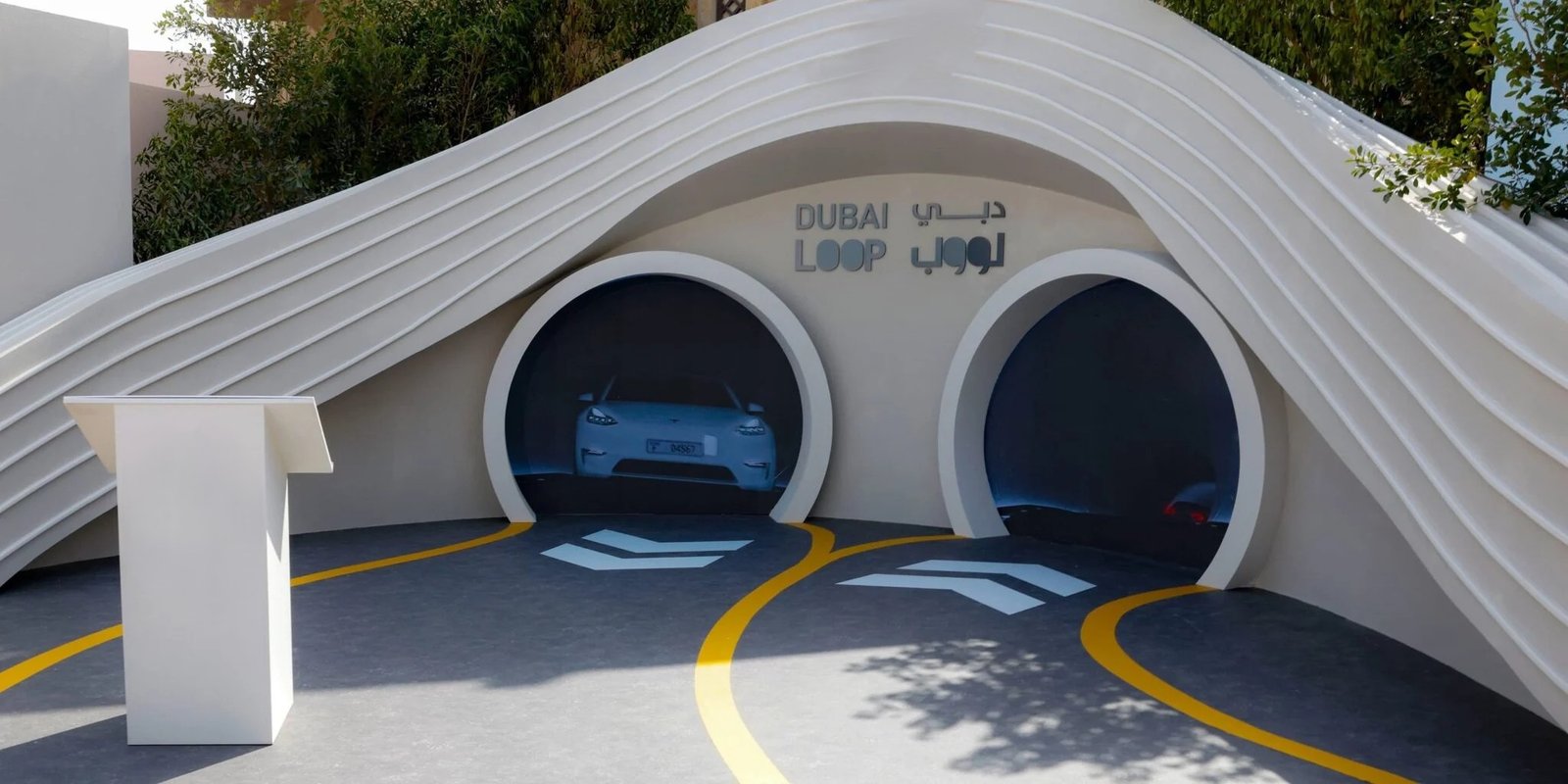
Dubai has built a global reputation for transforming ambitious ideas into landmark infrastructure projects that redefine urban development standards. From advanced transportation systems to futuristic real estate districts, the emirate consistently positions itself as a leader in innovation-driven city planning. The Dubai Loop tunnel project represents the latest example of this forward-thinking approach, combining advanced underground transportation technology with Dubai’s broader smart city ambitions. Announced through a strategic partnership between Dubai’s Roads and Transport Authority and Elon Musk’s The Boring Company, the Dubai Loop 2026 initiative is expected to reshape how residents, tourists, and business professionals move across some of the city’s busiest commercial districts.
The project has generated substantial international attention because it introduces a different transportation model compared to traditional metro systems. Rather than relying on large underground train networks, the Dubai Loop tunnel project focuses on compact high-speed tunnels designed for electric vehicle transport. This system aims to reduce traffic congestion, shorten travel times, and improve connectivity between high-density urban destinations while minimizing disruption to existing infrastructure during construction. The initiative also reinforces Dubai’s long-term commitment to sustainable mobility, digital infrastructure, and smart urban expansion.
Understanding the Vision Behind Dubai Loop 2026
The Dubai Loop 2026 project reflects a broader transformation occurring within modern urban mobility systems worldwide. Major cities are increasingly investing in intelligent transportation networks capable of handling rising population density and economic activity while reducing environmental pressure and traffic congestion. Dubai’s rapid growth over the last two decades has intensified demand for more efficient transit solutions connecting financial districts, tourism destinations, and residential communities.
Unlike conventional metro infrastructure that requires extensive excavation and large tunnel systems, the Dubai Loop route utilizes narrow underground tunnels measuring approximately 3.6 meters in diameter. According to official project details released by Dubai authorities, these tunnels will accommodate electric vehicles operating within a controlled underground environment designed for high-speed movement and minimal surface disruption.
The project also aligns closely with Dubai’s wider economic diversification strategy. Efficient transportation infrastructure directly influences business productivity, tourism activity, real estate demand, and investment attractiveness. By improving mobility across key commercial zones, the Dubai Loop tunnel project is expected to support operational efficiency for businesses while enhancing accessibility for residents and visitors. This positions the initiative not merely as a transportation development but as a strategic economic infrastructure investment.
Dubai Loop Route and Key Connectivity Areas
One of the most discussed aspects of the project involves the Dubai Loop route and how it integrates with existing transportation networks. The first phase of the development focuses on a 6.4-kilometre pilot corridor connecting Dubai International Financial Centre with the Dubai Mall and Burj Khalifa area.
The selected route is highly strategic because it links some of Dubai’s busiest economic and tourism destinations. DIFC serves as one of the region’s most important financial centres, housing multinational corporations, financial institutions, law firms, and investment companies. Meanwhile, Downtown Dubai remains one of the city’s largest tourism and commercial hubs, attracting millions of visitors annually through destinations such as Burj Khalifa and Dubai Mall.
The first phase is expected to significantly reduce travel time between these areas. Current road journeys between DIFC and Dubai Mall often experience congestion during peak periods, but project estimates suggest the underground route could reduce travel duration from approximately 20 minutes to only a few minutes.
Beyond the pilot phase, expansion plans indicate the Dubai Loop route could eventually extend to more than 22 kilometres with up to 19 stations connecting Dubai World Trade Centre, Business Bay, and additional mixed-use urban districts. This expansion would position the project as a complementary mobility solution supporting Dubai Metro and existing road infrastructure.
Dubai Loop Stations and Passenger Accessibility
The initial Dubai Loop stations announced by Dubai authorities have already attracted significant interest because of their placement within high-traffic business and tourism zones. Reports indicate the first four stations will include DIFC, ICD Brookfield Place, Zaabeel Dubai Mall Parking, and Burj Khalifa/Dubai Mall.
These locations were strategically selected to maximize passenger demand while supporting first-mile and last-mile transportation efficiency. One of the recurring challenges within modern urban transport systems involves connecting commuters from large transit hubs to their final destinations efficiently. Dubai Loop stations aim to address this challenge by offering fast underground connectivity between major commercial and tourism destinations.
The design philosophy behind the stations also reflects Dubai’s emphasis on integrating transportation convenience with modern urban planning. Unlike traditional rail platforms handling large passenger crowds simultaneously, the Dubai Loop system is expected to operate through smaller-scale electric vehicle transfers within dedicated tunnels. This approach prioritizes direct travel efficiency and potentially shorter waiting times for passengers.
At the same time, the project has generated debate regarding long-term scalability and throughput compared to conventional metro systems. Some transportation analysts and urban planning observers have questioned whether the vehicle-based tunnel model can match the passenger volume efficiency of larger public transit networks. Discussions across industry forums and public commentary reveal differing perspectives regarding operational practicality and future expansion potential.
Project Cost and Construction Timeline
The estimated financial investment associated with the Dubai Loop tunnel project highlights the scale of Dubai’s commitment to transportation innovation. Official announcements indicate the first 6.4-kilometre pilot phase is expected to cost approximately AED 565 million.
Construction for the initial phase is projected to take approximately one year following the completion of design and preparatory work. The broader network expansion, which could extend beyond 22 kilometres with 19 stations, is estimated to cost around AED 2 billion and may require approximately three years for completion.
Compared with traditional metro infrastructure projects, proponents argue the Dubai Loop system offers lower construction costs and faster deployment because of its smaller tunnel diameter and advanced tunnelling methods. This reduced infrastructure footprint also minimizes disruption to existing roads, utilities, and urban activity during construction.
The involvement of The Boring Company introduces international attention because the firm has previously implemented similar tunnel systems in the United States, particularly within Las Vegas. Dubai’s adoption of this technology signals its willingness to experiment with emerging transportation concepts while positioning itself as a testing ground for futuristic urban mobility solutions.
Dubai Loop Passenger Capacity and Operational Expectations
Passenger volume expectations remain one of the most important factors shaping public and industry perception of the Dubai Loop 2026 project. Official project data indicates the pilot phase is expected to accommodate approximately 13,000 passengers daily. Once the complete network becomes operational, total Dubai Loop passenger capacity could increase to approximately 30,000 passengers per day.
Earlier reports and preliminary projections referenced substantially higher hourly passenger targets, creating some confusion regarding the system’s ultimate throughput potential. Subsequent official statements clarified more conservative daily passenger estimates for the initial phases of development.
Despite debates surrounding capacity comparisons with traditional metro systems, Dubai authorities continue emphasizing the project’s role as a complementary transportation layer rather than a direct replacement for existing public transit infrastructure. The focus appears centered on reducing congestion within specific high-density corridors while improving premium point-to-point mobility between key urban zones.
The operational model is also expected to support Dubai’s growing interest in autonomous transportation systems and electric vehicle integration. As smart mobility technologies continue evolving globally, projects such as Dubai Loop could eventually contribute to broader adoption of automated urban transport networks.
Economic and Business Impact on Dubai
The Dubai Loop tunnel project extends beyond transportation because efficient mobility infrastructure directly influences economic productivity and urban competitiveness. Faster travel between business districts can improve operational efficiency for corporations, reduce commuter stress, and enhance accessibility for international investors and visitors.
Real estate markets may also experience indirect benefits from improved transportation connectivity. Historically, infrastructure developments within Dubai have influenced commercial and residential property demand in surrounding districts. Enhanced accessibility often increases attractiveness for office developments, hospitality investments, and mixed-use urban projects.
Tourism could similarly benefit from improved movement between major attractions and commercial zones. Dubai Mall, Burj Khalifa, DIFC, and nearby destinations collectively attract millions of annual visitors, and reducing congestion around these areas may improve overall visitor experience and mobility efficiency.
From a strategic perspective, the project reinforces Dubai’s global branding as a technologically advanced city willing to pursue innovative infrastructure solutions ahead of many international markets. This image supports broader efforts to attract multinational corporations, technology firms, entrepreneurs, and institutional investors seeking business-friendly environments supported by advanced infrastructure systems.
The Future of Smart Mobility in Dubai
The Dubai Loop 2026 initiative reflects a growing international shift toward integrated smart transportation ecosystems. Cities worldwide are exploring underground transit innovation, autonomous mobility, and environmentally efficient transportation networks capable of supporting future urban expansion.
Dubai’s approach combines infrastructure modernization with economic development objectives, sustainability ambitions, and technological experimentation. Whether the Dubai Loop tunnel project ultimately evolves into a larger citywide network or remains focused on high-density corridors, it demonstrates how urban mobility continues becoming a central component of economic competitiveness and smart city planning.
The project also highlights Dubai’s willingness to adopt unconventional transportation technologies while leveraging international partnerships to accelerate infrastructure development. As construction progresses and operational details become clearer, the Dubai Loop will likely remain one of the most closely watched urban transportation initiatives in the Middle East.
Final Thoughts on Dubai Loop Tunnel Project 2026
The Dubai Loop tunnel project represents more than a transportation initiative; it reflects Dubai’s broader ambition to redefine urban mobility through innovation, speed, and infrastructure efficiency. By connecting critical commercial and tourism districts through underground transit corridors, the project aims to improve business productivity, reduce congestion, and strengthen the emirate’s position as a global smart city leader.
Although questions remain regarding long-term scalability and operational capacity, the project’s strategic importance to Dubai’s economic and infrastructure development is undeniable. The combination of advanced tunnelling technology, electric vehicle integration, and high-profile international collaboration positions Dubai Loop 2026 as one of the region’s most ambitious transportation projects.
As Dubai continues investing in future-ready infrastructure, projects like Dubai Loop are likely to influence how modern cities approach transportation planning, urban growth, and smart mobility integration over the coming decade.
© 2026 Mana Global. All rights reserved.